


By Our Correspondent
LAHORE: Chairman Pakistan Peoples Party (PPP) Bilawal Bhutto Zardari has termed the Benazir Income Support Programme (BISP) as the nation’s most reliable mechanism and a globally acclaimed system for delivering swift and transparent financial assistance in times of crises, including natural disasters like floods.
Read also: PPP demands flood audit, slams govt delays in relief efforts
He urged the ruling Pakistan Muslim League-Nawaz (PML-N) government to reconsider its decision of not utilizing BISP to support citizens reeling under the devastation caused by the recent floods.
Expressing grave concern, the PPP Chairman also lamented the federal government’s persistent failure to reach out to the international community for urgent assistance, despite the unprecedented destruction left behind by the floods.
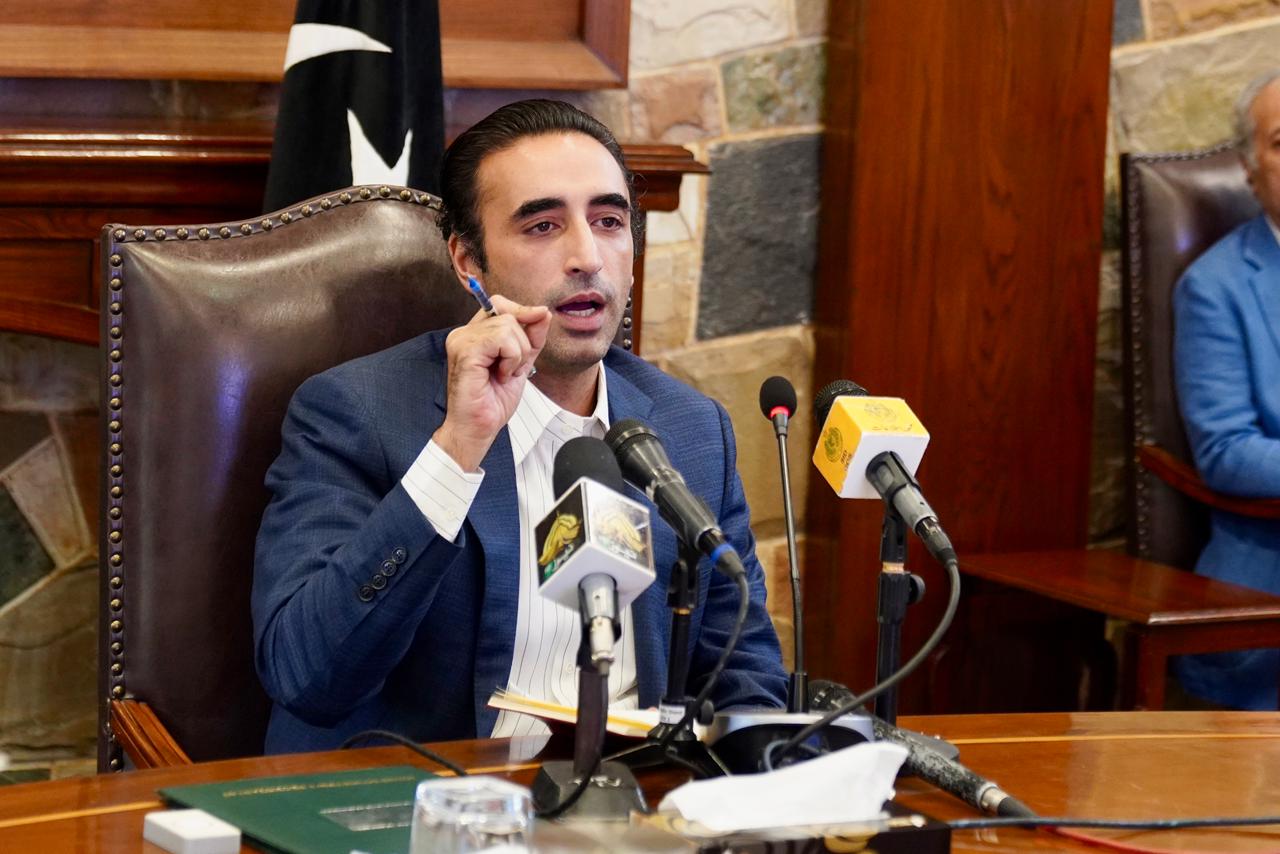
According to the press release issued by the Media Cell Bilawal House, the PPP Chairman, while addressing a press conference at the Chief Minister’s House here on Thursday, said that during floods and other natural disasters around the world, it is always the central governments that take the lead role in providing relief and rehabilitation to the affected people.
He said that the recent floods have caused severe destruction in Gilgit-Baltistan, Khyber Pakhtunkhwa, and the katcha areas of Sindh, while Punjab has borne the heaviest losses. South Punjab, in particular, has witnessed unprecedented devastation. “Even today, vast areas of Multan, Bahawalpur, Lodhran, and Jalalpur remain submerged, yet the government has failed to reach the people in need,” he pointed out.
Chairman Bilawal Bhutto Zardari said that the devastation caused by the floods is still unfolding, and questioned why extending assistance to the victims has been turned into a matter of ego.
Highlighting the situation, he said that the BISP remains the only mechanism through which the federal government can deliver immediate relief to the flood-affected people. “In previous floods, the federal government extended assistance through BISP. During COVID-19 as well, this mechanism was used. If they refuse to do so today, what is the fault of South Punjab? When people are homeless and forced to live on the roads, why can’t they be helped?” he asked.
Chairman PPP added that those who criticize the BISP perhaps do not fully grasp its significance and effectiveness. He recalled that BISP was launched at a time when the PPP and the PML-N were coalition partners, with Ishaq Dar serving as Finance Minister. He pointed out that in the past, PML-N leaders themselves praised the programme, but if they have now taken a U-turn on this policy, they must explain their reasons. Citing facts, he said that the largest number of BISP beneficiaries are in Punjab, and therefore opposing this programme would, in reality, be a direct blow to the rights of the people of Punjab.
Chairman Bilawal Bhutto Zardari welcomed Prime Minister Mian Shehbaz Sharif’s announcement of imposing an agricultural emergency and a climate emergency in the country in response to his appeal, and also termed the waiver of electricity bills for residential consumers in flood-affected areas a positive step. He further said that just as in the past, whenever the country faced a disaster, the federal government sought assistance from the international community, the same should have been done this time as well. He stressed that in the wake of the recent floods, the federal government ought to have approached the world for international aid.
Chairman Bilawal Bhutto Zardari emphasized that the federal government must engage with the International Monetary Fund (IMF) in light of the devastation caused by the recent floods and seek a review of its conditions. He said that under the existing IMF-agreed terms, Pakistan is unable to provide farmers with support prices for their crops. “The federal government must renegotiate these policies so that our farmers are ensured fair support prices and access to fertilizer at affordable rates,” he added.
Chairman PPP pointed out that the agricultural sector across the country is under immense strain, warning that if urgent measures are not taken, Pakistan could face severe threats to food security in the future. He said that instead of spending the people’s money on foreign farmers, the government should invest in its own agricultural community so that Pakistan can move from being a wheat-importing nation to becoming a wheat-exporting one. He announced that the PPP-led Sindh government will provide a special agricultural package for flood-affected growers and farmers through the Hari Card from its own resources.
He added that if the federal government extends its support, additional needs can also be addressed, which will significantly strengthen Pakistan’s agricultural sector.
Chairman Bilawal Bhutto Zardari further said that every Pakistani has expressed a positive view about the recent Pakistan–Saudi Arabia agreement, adding that a government briefing on this agreement has already been scheduled for parliament, while a request for an in-camera session has also been submitted.
Speaking on Palestine, he said that during the United Nations session, even countries that had previously opposed recognizing Palestine are now extending recognition. He emphasized that following the Israeli attack on Doha, not only Middle Eastern nations but also those states that continue to support Israel must urgently reconsider their policies.
Responding to a journalist’s question, the PPP Chairman said that India is financing terrorism in Balochistan and Khyber Pakhtunkhwa. He termed terrorism the greatest challenge facing the country, stressing that the solution to Balochistan lies in politics — through decisions made by political consensus in a manner that benefits the people.
He added that just as Pakistan succeeded in the past in its war against terrorism, it will prevail once again.
Answering another question, Chairman Bilawal Bhutto Zardari welcomed his cousins’ decision to re-enter politics. He said they have always had his and his family’s best wishes and will continue to do so in the future.
On the occasion, Sindh Chief Minister Syed Murad Ali Shah, Senior Provincial Minister Sharjeel Inam Memon, Agriculture Minister Muhammad Bux Mahar, and other leaders were also present.