


By commerce Reporter
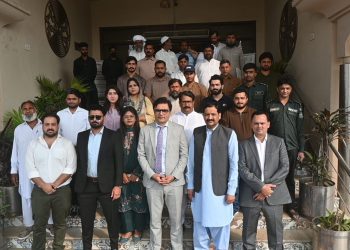
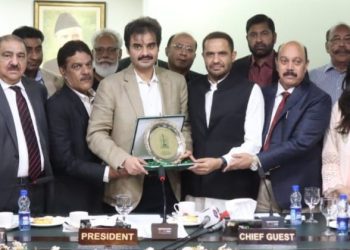
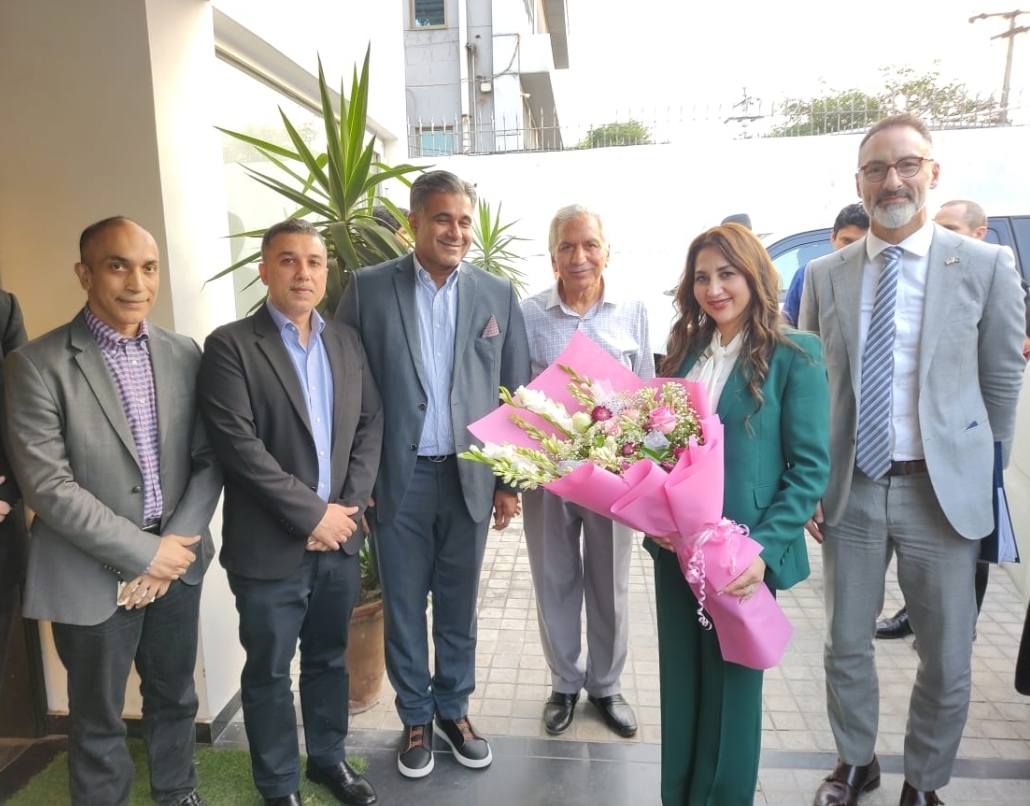
LAHORE: Ms. Natalie A. Baker, Acting United States Ambassador to Pakistan and All Pakistan Textile Mills Association discussed ways and means to foster bilateral trade and economic relations between Pakistan and the United States of America.
Mr. Kamran Arshad, Chairman APTMA, Mr. Asad Shafi, Chairman North, Mr. Ahmad Shafi, Vice Chairman, Mr. Rahim Nasir Former Chairman, Mr. Haroon Ellahi, Mr. Ahsan Shahid, Mr. Faisal Jawed, Mr. Amin Rehman Senior Executives, and Secretary General Mr. Raza Baqir along with senior members of APTMA welcomed Ms. Natalie A. Baker who was accompanied by Mr. Stetson Sanders US Consul General at Lahore, Mr. William Campbell, Political and Economic Chief and Ms. Amna Anis, Economic Specialist.
They discussed the enormous potential to work together in the fields of cotton and textile besides expanding trade and investment relations in focused areas, reducing trade deficit and diversifying major commodities of trade between both the countries in the wake of U.S. reciprocal tariffs.
Both sides were of the view that Pakistan has strong potential to grow in textile apparel and other sectors. APTMA leadership continues to focus on engagements and dialogue with their American counterparts to uplift trade volume and to gain maximum benefit of economic partnership between both the countries.
Speaking on the occasion, Mr. Kamran Arshad, Chairman APTMA, made a detailed presentation on textile industry of Pakistan. He pointed out that Pakistan’s domestic cotton production has declined over the years and even this year huge quantity of cotton would be required to be imported due to poor cotton crop.
He said the major supplier of cotton to Pakistan is the US. Pakistan is the largest importer of U.S cotton in the world. He added that the import of U.S cotton compensates loss in production of local cotton. Kamran added that the availability of cotton and other inputs is essential for economy of the country as textile constitutes 62% of total exports from Pakistan.
Kamran Arshad highlighted issues being faced by textile industry including withdrawal of Regionally Competitive Energy Tariff for both electricity and gas. He specifically pointed out that more than 100 spinning mills were lying closed due to higher energy costs, excessive tax incidence and voluminous import of yarn from various countries. Kamran emphasized for enhancing cooperation between textile sectors of both the countries to ensure not only revival of textile industry in Pakistan but also to guarantee cost effective textile supplies from Pakistan to US consumers. He stressed on evolving a mechanism to import U.S cotton under GSM-102 against export of textile products to U.S. He added that proceeds of Pakistan textile exports to U.S may be used as collateral through the mechanism of an escrow account whereby this liability is deducted from the proceeds of Pakistan’s textile exports the U.S markets.
Speaking about the strength of the textile industry in Pakistan and further expansion of bilateral trade between U.S and Pakistan, Asad Shafi, Chairman North said that U.S. is Pakistan’s largest trading partner with a total bilateral trade of more than seven billion dollars in 2024. According to him, total exports of Pakistan to the U.S stood at $5.12 billion out of which $3.93 billion or 77% were textile and apparel. As against this, Pakistan imported $2.14 billion goods from U.S in 2024 of which cotton imports were more than $700 million.
Asad stressed upon promotion of U.S – Pakistan cotton linkages and promotion of textile toll manufacturing in Pakistan by U.S textile industry. He said there is a need for technology transfer to Pakistan for high yielding cotton seed and synergies with U.S cotton research institutes for better quality. He also sought capacity building of agricultural research institutions in Pakistan and technology transfer for cotton traceability.
Asad said that the United States should facilitate entry of international seed companies with transgenic technologies besides introduction of improved, genetically modified, and certified seed. He also spoke on the importance of establishing joint ventures between Pakistan and US investors.