


By Our Correspondent
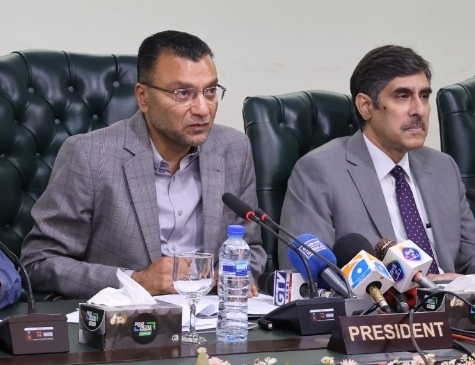
LAHORE: Lahore Chamber of Commerce and Industry (LCCI) Senior Vice President Khalid Usman has voiced deep concern on behalf of the business and industrial community over the State Bank of Pakistan’s (SBP) decision to maintain the status quo in the policy rate during its Monetary Policy Committee (MPC) meeting held on Wednesday.
Read also: Trade & industry disappointed at status quo in policy rate: FPCCI
Khalid Usman pointed out that the central bank’s decision defies logic, especially when the Consumer Price Index (CPI) stood at just 3.20 percent in June 2025, as per official government data. He stressed that continuing with a high policy rate of 11.0 percent, which reflects a 780 basis points premium over inflation, is economically unjustifiable and out of sync with the ground realities.
He said the business community had pinned hopes on a substantial cut in the interest rate — especially after repeated consultations across sectors under the umbrella of national business forums — but the central bank has let them down. “We had expected at least a single-stroke rate cut of 500 basis points to bring the rate closer to inflation and align it with the goals of the Special Investment Facilitation Council (SIFC) and the Prime Minister’s vision for industrial growth,” he added.
Khalid Usman noted that inflation is widely expected to stay between 3 to 4 percent for July and August, as per expert forecasts. In light of that, he believed a policy rate around 6 percent would have been far more appropriate and would have given much-needed breathing space to exporters and industrialists.
“The high cost of capital is simply choking the industry,” he remarked, adding that Pakistan’s exporters are already struggling to stay afloat in the highly competitive regional and global markets. “Without affordable financing, our exports cannot grow, and neither can the country’s economy.”
He also highlighted that the ease of doing business and access to finance in Pakistan remains dismally low compared to regional competitors like India, Bangladesh, and Vietnam. “If we don’t bring down borrowing costs now, we will miss the bus of regional economic integration and investment,” he cautioned.