


By Our Correspondent
LAHORE: The Federal Board of Revenue (FBR) has issued SRO 1359(I)/2025, a landmark policy notification that introduces wide-ranging relief measures for exporters and importers under the Export Facilitation Scheme (Efs). The move is being hailed as a significant breakthrough by the business community, particularly by the Lahore Chamber of Commerce & Industry (LCCI), whose President Mian Abuzar Shad played a pivotal role in securing these policy changes.
Read also: Businessman’s factory seized by criminal gang: LCCI President demands protection for industrialists
The key highlights of SRO 1359(I)/2025 include the allowance of insurance guarantees in addition to bank guarantees for EFS users, offering more flexibility in meeting export requirements. Exporters are now permitted to import 10% additional raw materials beyond their approved quantities without the need for prior approval from regulatory authorities. The SRO also sets clear limits on copper content in compressor and motor scrap imports, ensuring quality control in scrap-based manufacturing inputs.
Another major relaxation under the new SRO is the extension in timelines for the consumption of imported raw materials under EFS. This will allow exporters to better manage production cycles and reduce pressure on working capital. However, the notification also excludes certain textile inputs—namely raw cotton, cotton yarn, and grey cloth—from the EFS, addressing misuse concerns raised by industry experts.
The issuance of this SRO follows a months-long campaign led by LCCI President Mian Abuzar Shad, who actively engaged with stakeholders at the highest levels, including the Prime Minister’s Office, FBR, and other trade-related departments. The business-friendly reforms were achieved through coordinated lobbying by the LCCI and support from Minister Petroleum Ali Pervaiz Malik and for Industries & Production Division Haroon Akhtar Khan, who provided technical insights and policy recommendations during the drafting phase.
Mian Abuzar Shad praised the role of Prime Minister Shehbaz Sharif, who he said responded positively to the exporters’ concerns and directed the FBR to make the required changes. He also acknowledged the support of the military leadership, especially Chief of Army Staff General Syed Asim Munir and Chairman Joint Chiefs of Staff Committee General Sahir Shamshad Mirza, who emphasized that economic reforms and support for legal exporters are integral to Pakistan’s broader national security strategy.
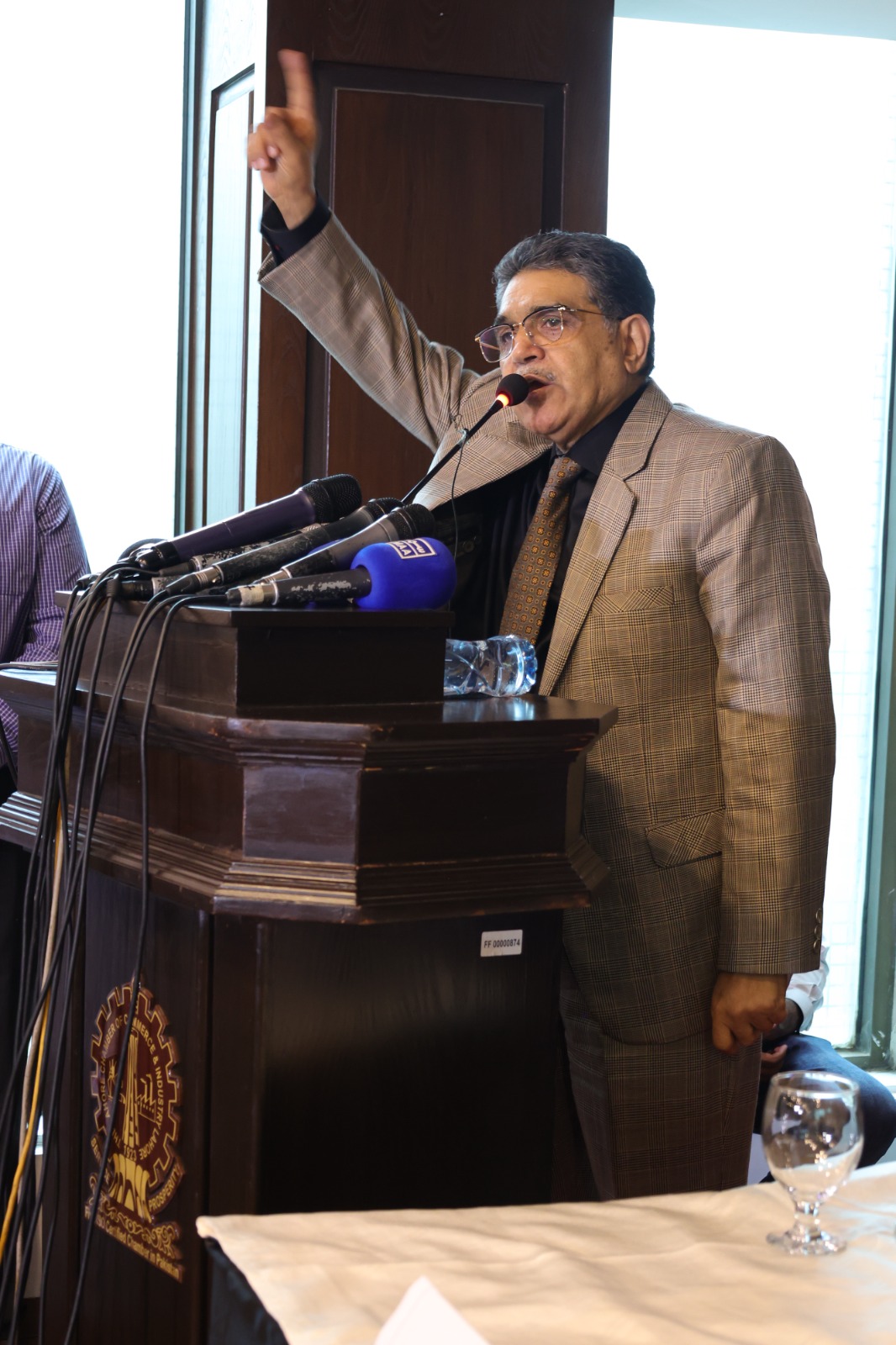
Shad stated, “The notification of SRO 1359(I)/2025 is a clear demonstration of what can be achieved when the public and private sectors work in harmony. This SRO will go a long way in reducing the cost of doing business and improving Pakistan’s export competitiveness.”
He further acknowledged the role of other trade bodies, including the Karachi Chamber of Commerce & Industry (KCCI) president Muhammad Jawed Bilwani, for presenting a unified voice alongside LCCI in advocating for policy reforms.
Ali Pervaiz Malik and Haroon Akhtar Khan, who were instrumental in advising on the contours of the new policy, noted that the SRO represents a practical step toward simplifying procedures and eliminating bureaucratic red tape. They emphasized that the FBR must now ensure smooth implementation and effective monitoring of the revised EFS procedures.
With this notification, exporters across key sectors such as textiles, engineering, IT, and automobile parts are expected to benefit from reduced financial pressure, streamlined documentation, and faster clearance of imported inputs. The business community has expressed hope that this reform momentum will continue.
Mian Abuzar Shad also hinted at future proposals under consideration by the LCCI, including the establishment of a fast-track tribunal for export-related disputes, the launch of a centralized digital portal for refunds and EFS processing, and the creation of a business rights protection framework for small and medium enterprises (SMEs).
“SRO 1359(I)/2025 is just the beginning,” Shad remarked. “We are working on a number of other policy reforms to ensure that Pakistani exporters can compete globally on fair and supportive terms.”
This successful outcome is being seen as a rare example of effective coordination among the chambers of commerce, top policy advisors, and the state apparatus—raising hopes for sustainable, export-led economic recovery in Pakistan.