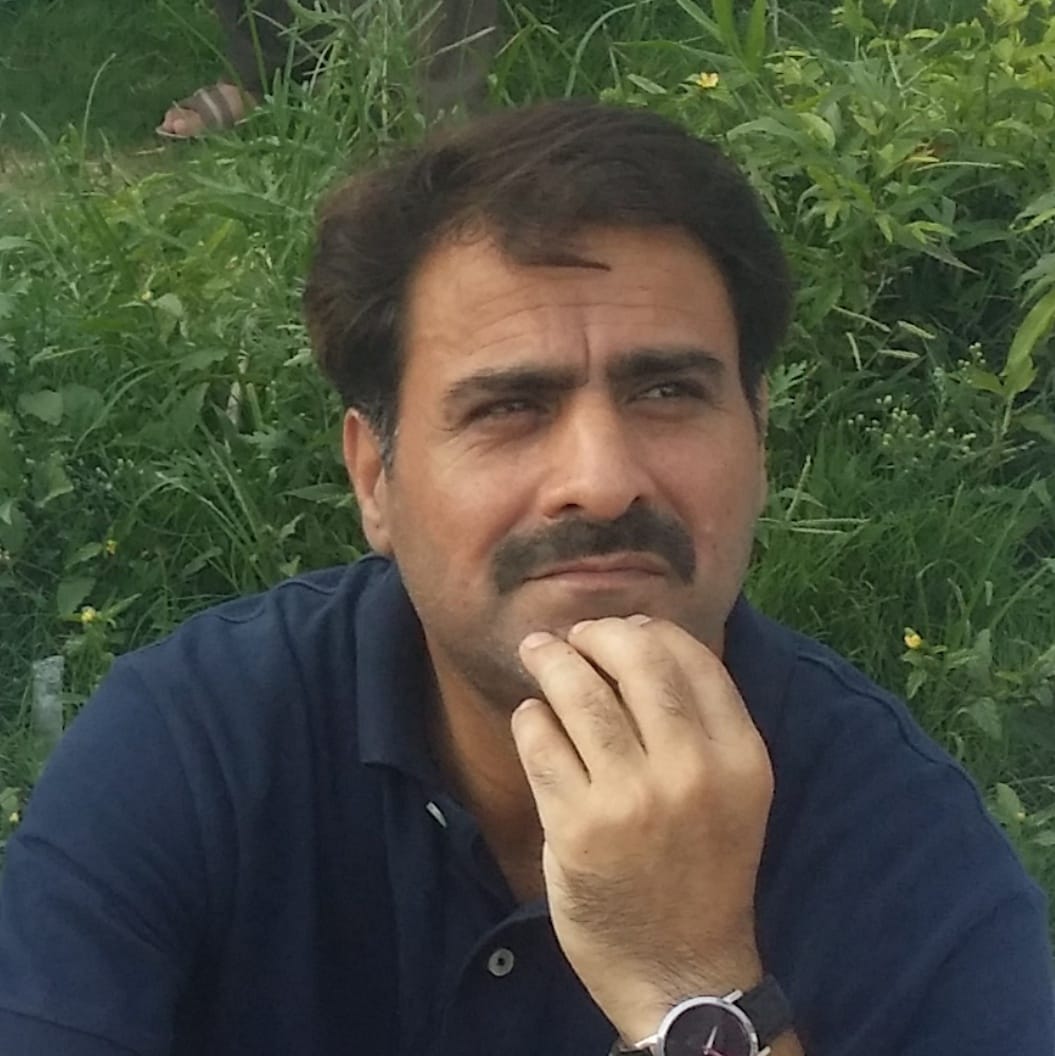



Shaikh Yaqoob
Chairman Jammu and Kashmir Peoples League Constuent of APHC
As the dust settles on the 12-day Iran–Israel war, triggered by a deadly spiral of airstrikes, counterstrikes, and the U.S.-led bombing of Iranian nuclear sites, a new regional reality is emerging — one where power is recalibrated, alliances are realigned, and geography becomes destiny once again.
At the epicentre of this unfolding regional chessboard is Pakistan: a nation often misunderstood, frequently underestimated, and now — unmistakably — central to the strategic and moral future of the region.
The June 2025 escalation saw Israel strike deep into Iranian territory, targeting military and suspected nuclear sites. Iran retaliated by launching ballistic salvos toward Israeli ports and bases. The conflict intensified with the United States’ direct intervention, bombing Fordow, Natanz, and Esfahan in what was described as a preemptive containment measure. While Washington hailed its precision, the global reaction was far more divided.
Amid this, Pakistan’s position was both principled and pragmatic — condemning aggression, avoiding escalation, and asserting its strategic autonomy.
Pakistan unequivocally condemned the Israeli aggression. In a carefully worded statement, it condemned Israel’s violation of Iran’s sovereignty, calling it a “flagrant breach of international law” and a “threat to regional peace and stability.” The Foreign Office emphasized the UN Charter’s protection of sovereign equality, and warned that preemptive warfare based on unverified intelligence or unilateral definitions of threat undermines the legal foundations of international order.
This was not rhetorical grandstanding, in fact, it was a return to Pakistan’s traditional foreign policy ethos: standing by international legality, opposing military adventurism, and calling for restraint from all parties, including its own strategic partners.
Despite this vivid stance, many biased and poisonous minds are busy picking holes in it and rubbishing it as a smoke screen. To these evil minds who accuse Pakistan of “abandoning a brother,” a fuller reading of history is necessary:
Iran’s support for sectarian militias in Pakistan in the 1980s and ’90s sparked bloodshed in Pakistan’s urban centres, undermining its internal cohesion.
Tehran allowed Indian intelligence operations to operate from its soil, with the notorious Kulbhushan Jadhav, a serving Indian naval officer and RAW agent, infiltrating via Iran.
While Pakistan fought America’s war on terror and sheltered millions of Afghan refugees, Iran chose strategic silence or complicity, prioritizing its own regional manoeuvres. In contrast to Iran’s feverish hobnobbing with our immediate and inordinate adversary, India, what Pakistan’s response exhibited was politically , morally, and strategically grounded in prudence, fairness and deep geographical, historical and religious relationship. Everybody needs to understand that our refusal to take sides militarily in the 12-day war was not indecision — it was strategic maturity. While the region burned,Pakistan:
Maintained open channels with all major actors — Iran, the Gulf, the U.S., and China.
Offered humanitarian contingency planning in the event of refugee spillovers or attacks on pilgrims.
Refused to militarize its narrative, instead calling for an emergency session of the OIC and a multilateral ceasefire mechanism.
Its voice of de-escalation, even amid provocations, carried moral weight precisely because it came from a nuclear power with battlefield experience — yet no imperial ambition.
As for our own geostrategic weight, nobody could overlook the fact that Pakistan sits at the convergence of four conflict zones and three power blocs. It borders:
A rising China (with which it shares the China-Pakistan Economic Corridor),
A hostile India,
A restless Afghanistan,
And a revolutionary but crisis-ridden Iran.
Its Gwadar port, located just 600 km from the Strait of Hormuz, places Pakistan squarely in the energy security matrix of the Gulf, the economic corridors of Asia, and the nuclear deterrence logic of South Asia. No regional or global power can afford to ignore Pakistan’s geography — or its growing diplomatic balance.
This new strategic reality was subtly, but unmistakably acknowledged by the United States, when it extended a rare invitation to General Asim Munir, Pakistan’s Army Chief, to attend the 250th anniversary celebrations of the U.S. Armed Forces. Such a gesture is neither cosmetic nor accidental — it reflects a recalibration in Washington’s approach, recognizing Pakistan not as a proxy or pawn but as a potential stabilizer and pivot
In a region where trust is rare and crises are cyclical, Pakistan’s military professionalism, nuclear restraint, and diplomatic engagement make it uniquely positioned to mediate, de-escalate, and help reconstruct regional equilibrium.
Pakistan’s role in the emerging Middle East must not be one of silent observer but active architect of a new framework. Its unique combination of:
1,Capability Relevance,
2,Military Strength Nuclear deterrence with conventional experience,
3,Geopolitical Location, bordering key flashpoints and energy routes,
4, Diplomatic Balance, 5,Credibility in both the Sunni and Shia worlds, and
6, Ties with China and the West.
makes it a potential bridge between Gulf monarchies, Iran, Turkey, and even Afghanistan.
To conclude, let me say that the 12-day war between Iran and Israel tested the world’s diplomatic vocabulary. It reasserted the role of military might, but also the cost of unchecked aggression. In that maelstrom, Pakistan stood firm but flexible — condemning illegality, avoiding escalation, and preserving room for future diplomacy.
It was not a betrayal of Iran — it was a reaffirmation of Pakistan’s belief in law, restraint, and dignity. If the Muslim world seeks a leader who neither fans war nor flees responsibility, Pakistan’s example deserves closer attention.
In the age of new alliances and collapsing certainties, Pakistan may yet prove that balance rooted in memory, sovereignty, and strategic foresight is the highest form of power.