


By Asim Shahzad
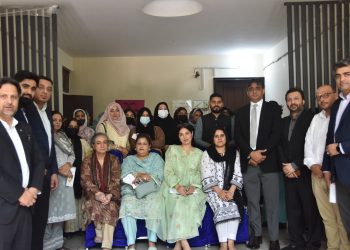
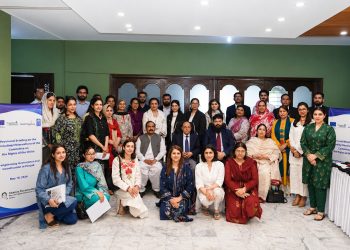
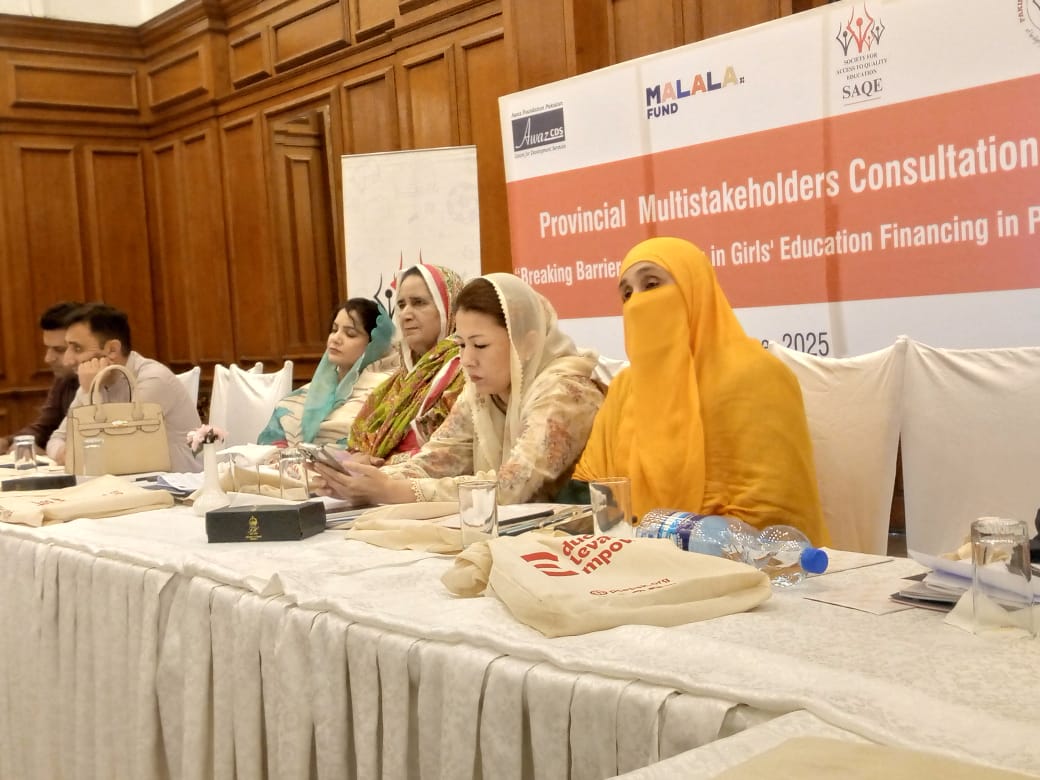
LAHORE: Members of the Punjab Assembly gathered at a high-level roundtable titled “Breaking Barriers: Investing in Girls’ Education Financing in Punjab” to address the alarming education crisis in the province—where over 3.5 million girls remain out of school despite a record increase in the education budget.
The roundtable, organized by AwazCDS-Pakistan in collaboration with the Society for Access to Quality Education (SAQE), focused on gender-responsive and equitable financing as a key lever to break cycles of learning poverty, school dropouts, and marginalization.
Members of the Punjab Assembly at the roundtable reaffirmed their commitment to address the education emergency with urgency and purpose and leverage parliamentary platforms to ensure that education financing is inclusive, efficient, and resilient, prioritizing the needs of girls and marginalized learners at every level. They also pledged to raise informed and strategic questions during budget sessions, advocate for increased and gender-responsive allocations, and push for timely release and effective utilization of education funds.
Speaking at the session, Zehra Arshad, Executive Director, SAQE, emphasized that despite a significant increase in the education budget, deep disparities in access, quality, and infrastructure persist—especially in underserved, rural, and climate-vulnerable districts. She highlighted that development allocations remain insufficient to address the unique challenges faced by girls, children with disabilities (CWDs), and other marginalized groups. She emphasized that climate disruptions, safety concerns, poverty, lack of teachers’ training in gender-sensitive pedagogies, and outdated infrastructure are pushing vulnerable learners—particularly adolescent girls—out of the education system. There is an urgent need for equity-based, more efficient allocations devolved to the school level to expand girls’ middle and secondary schools, ensure safe transport, and invest in digital and skills-based learning that prepares girls for meaningful futures.
Zia ur Rehman, Chief Executive of AwazCDS-Pakistan, emphasized that gender equality in education must be prioritized through targeted financial commitments. He called on the government to immediately recruit over 100,000 public school teachers across Punjab to address the severe shortage that disproportionately affects girls. He also urged that the stipend under the Zewar-e-Taleem program be increased from Rs. 1,000 to at least Rs. 2,000 per month to reflect current economic realities, and that the program be expanded across the entire province, beyond the limited districts currently covered.
Former Additional Secretary of the School Education Department, Mr. Qaiser Rasheed, highlighted several urgent reforms needed to strengthen the public education system in Punjab. He stressed the importance of adopting a gender-responsive budgeting approach, which considers the specific needs of both boys and girls in education planning and resource allocation.
He pointed out that poverty remains the primary reason for school dropouts, particularly among children aged 5 to 16. To address this, he recommended expanding conditional cash transfer programs by increasing stipends to encourage families to keep their children in school.
Participants of the roundtable collectively emphasized the importance of solarizing schools, expanding digital access, and accelerating infrastructure development across Punjab’s public education system. These elements, they noted, are not luxury investments but essential foundations for creating inclusive and effective learning environments.
Civil society representatives underscored that meaningful change requires a shift away from generic, reactive measures toward targeted, needs-based financing that actively dismantles gender-based barriers. They called on provincial leadership to recognize investing in girls’ education as a critical strategy for long-term development, resilience, and gender justice.
Adding a political voice to the discussion, Member of Provincial Assembly Ms. Sumbla Malik highlighted the need for changing societal mindsets and attitudes toward girls’ education, stressing that behavior change is as vital as financial reform. In her closing remarks, MPA Hameeda Waheed ud Din expressed strong support for the initiative and reaffirmed her commitment to advancing the agenda in the Punjab Assembly. “We will table resolutions and continue working for this noble cause until every girl in Punjab has access to safe, quality education.