


By M Qadeer
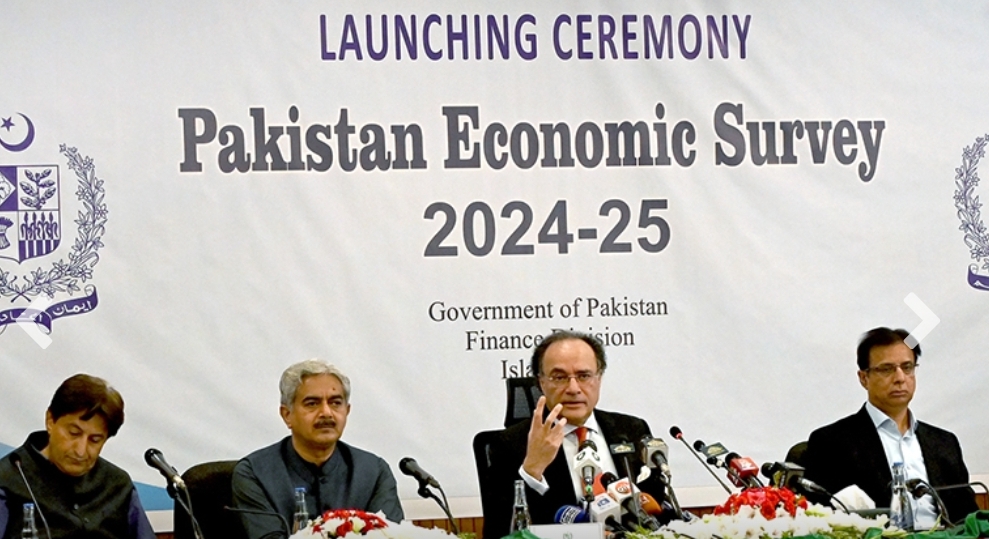
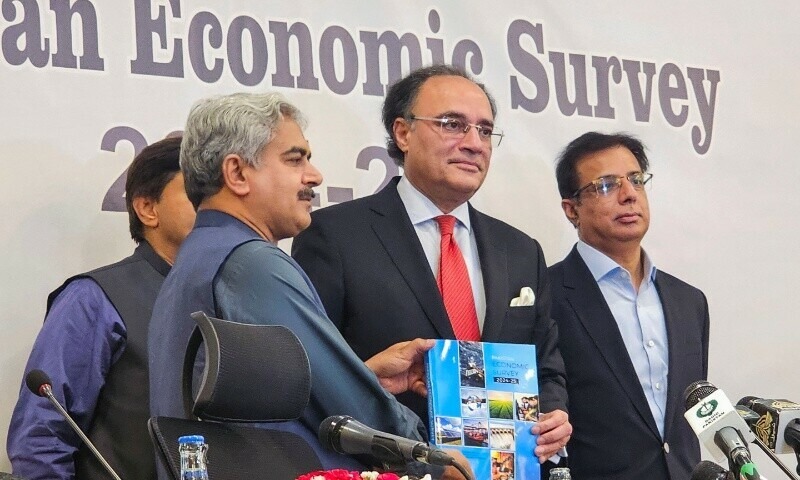
Finance Minister Muhammad Aurangzeb has presented the Economic Survey for 2024–25, just days before the federal budget 2025–26. While the survey shows signs of improvement, a closer look raises serious questions.
The Economic Survey 2023, shared under the previous government, showed how badly the economy was struggling. GDP growth was only 0.29 per cent, inflation was above 29 per cent, and the country had low foreign reserves and a large current account deficit. The only positive sign was the agriculture sector, which grew over 6 per cent due to strong wheat and cotton crops. However, both industry and services were weak, mainly because of political issues and poor planning.
In 2024, the government claimed a small recovery, with GDP growth of around 2.68 per cent. The latest survey for 2025 reports growth at 2.7 per cent, with inflation dropping to 4.6 per cent and the fiscal deficit reduced to 2.6 per cent of GDP.
On the surface, these numbers sound good—but the ground reality tells a different story. Agriculture, which was strong last year, grew by only 0.56 per cent this year. Major crops like wheat and cotton did not perform well. The government tried to show a better picture by highlighting livestock growth, but that does not hide the problems.
The interest rate was cut from 22 per cent to 11 per cent, which is a good step. But it came too late to help industries, and large-scale manufacturing is still in decline. The services sector, including wholesale and retail trade, grew by just 0.14 per cent, even though it is a big part of the economy.
By law, under the Fiscal Responsibility and Debt Limitation Act, the government must give a clear and honest picture of the economy. But key issues—like energy sector debt, slow development in provinces, and high loan repayments—have not been properly explained in the 2025 survey.
As the new budget approaches, the public deserves truth, not just fancy numbers. Without solving real problems in farming, governance, and debt, any so-called recovery will be weak—and people will lose more trust in the system.