By The Tribune International Staff
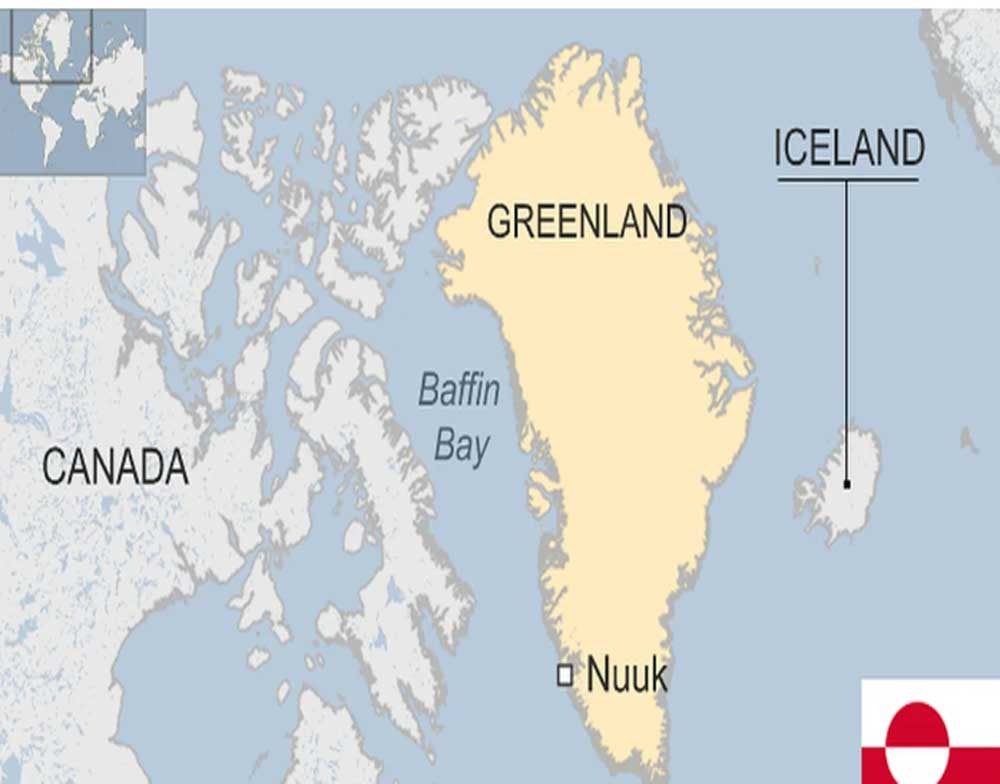
Greenland, the world’s largest island, has become a major focal point of geopolitical tension in early 2026 after a renewed push by U.S. President Donald Trump to acquire control of the territory sparked sharp responses from Denmark and Greenland’s own leaders.

Read also: US launches strikes inside Venezuela amid escalating Trump–Maduro standoff
Who rules Greenland?
Greenland is an autonomous territory of the Kingdom of Denmark, meaning it governs many of its internal affairs but remains part of the Danish realm. Denmark handles Greenland’s foreign policy and defense on its behalf. The island also holds a special status in international affairs and participates in Arctic multilateral forums.
Why is the U.S. interested?
The United States’ interest in Greenland is not new. In 1946, the U.S. offered to buy Greenland from Denmark after World War II — an offer Denmark declined. More recently, Trump first floated the idea of “buying” Greenland in 2019, which was widely dismissed as unrealistic at the time.
But in 2026, Trump’s rhetoric has intensified, with the U.S. president saying the United States “absolutely needs” Greenland, arguing its strategic importance for American defense and security. Greenland lies at the crossroads of the Arctic and North Atlantic, making it critical for missile defense systems, early warning radar networks and emerging Arctic shipping routes. The island also sits atop large deposits of critical minerals — rare earth elements, uranium, and other resources that are essential for modern electronics, defense industries and efforts to reduce dependence on rivals like China.
What is Trump proposing?
Trump’s statements have suggested a range of options for gaining control of Greenland — from financial incentives or purchase negotiations to hinting that military force could be considered if peaceful options fail. He has suggested the U.S. would pursue its interests “whether they like it or not,” saying a deal could be made “the easy way or the hard way.”
How has Denmark reacted?
Denmark has responded with strong rejection. Danish Prime Minister Mette Frederiksen has publicly told the United States to stop threatening a longtime ally and said Denmark and Greenland have no intention of selling or surrendering control of the territory. She noted that the U.S. has no right to take over any part of the Danish Kingdom and warned that any military action against a fellow NATO member would undermine the entire alliance — effectively saying it would be the end of NATO.
In parliamentary debates and media statements, Danish officials have reaffirmed their commitment to Greenland’s sovereignty. They have also circulated an old 1952 Danish defense directive that requires Danish forces to engage any invading army immediately — a requirement that has been portrayed in headlines as a “shoot first, ask questions later” policy. This order was created after World War II to prevent confusion during foreign attacks and remains in force.
However, fact checkers note the phrase “shoot first” was coined by media, and Denmark didn’t explicitly issue a new warning targeted at the U.S. Instead, officials clarified that their existing defense rules, which compel Danish forces to defend territory, remain active.
What do Greenland’s leaders say?
Greenland’s own political leaders have also rebuffed the idea of becoming part of the United States. The prime minister and major political parties have issued statements asserting that Greenland belongs to its people and that they “do not want to be Americans,” emphasizing Greenlanders’ right to self determination.
Where stands international reaction?
Major European powers and Canada have rallied behind Denmark and Greenland, saying only Greenlanders and Denmark should decide the island’s future. Leaders from several countries have underscored respect for international law and warned that any unilateral U.S. action could damage international norms and alliances. Germany’s leadership, for example, insisted that international law applies to everyone, including the United States, and that decision making about Greenland rests with Denmark and its people.
What happens next?
The dispute has triggered diplomatic tensions between two long standing NATO allies. U.S. officials, including the Secretary of State, have indicated a willingness to enter talks with Danish authorities to negotiate Greenland’s status, but the sticking points remain deep. Greenland’s potential independence in the future could reshape the conversation, but for now, Greenland’s current autonomy, strategic position and strong opposition to foreign control continue to be at the core of this international dispute.
About the Author