By Dr Alamdar Hussain Malik
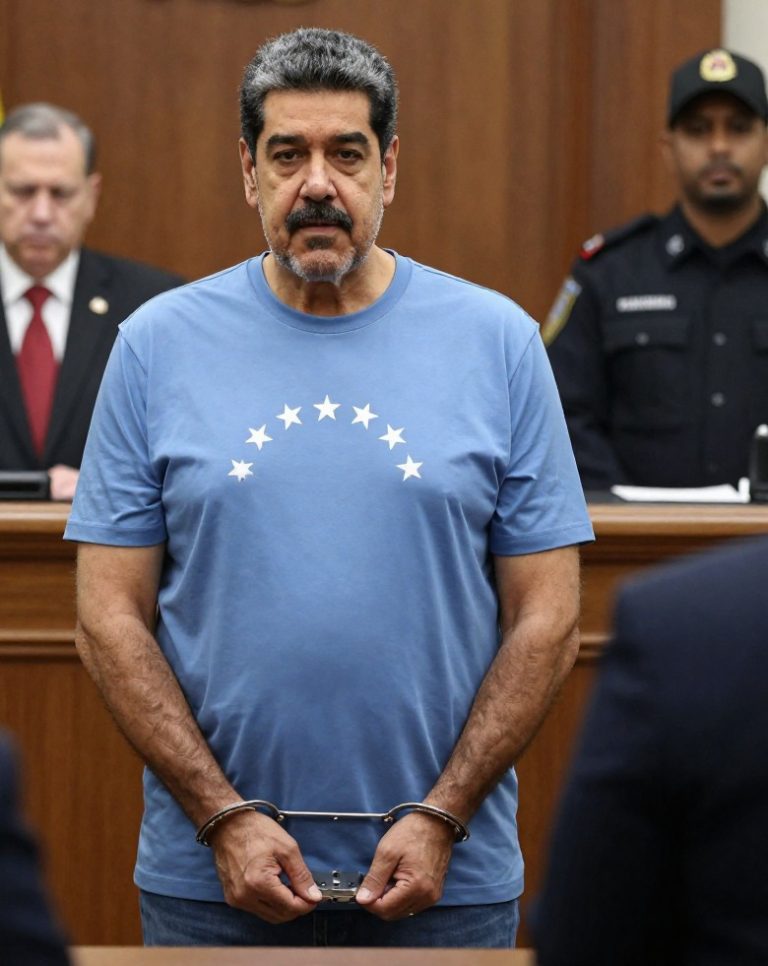
The Venezuelan episode stands as one of the most instructive examples of modern state failure, where extraordinary natural wealth failed to secure political stability, economic resilience, or national sovereignty. Once among Latin America’s most prosperous countries, Venezuela descended into prolonged crisis due to weak governance, institutional decay, economic mismanagement, and the gradual collapse of its security and defence structures. The arrest of the Venezuelan president was not an isolated or sudden development; rather, it was the culmination of years of systemic erosion that left the state incapable of protecting its own constitutional authority.
At the core of Venezuela’s collapse was the steady dismantling of democratic and administrative institutions. Political loyalty increasingly replaced competence, while the judiciary and regulatory bodies lost credibility and independence. An economy heavily dependent on oil revenues created a false sense of security during periods of high global prices. When oil prices declined and mismanagement intensified, the economy imploded, triggering hyperinflation, widespread unemployment, food shortages, and mass migration. This economic breakdown weakened the social contract and fueled political unrest, placing immense pressure on already fragile state institutions.

Read also: Unemployment threatens Pakistan’s veterinary profession
A decisive and often underappreciated factor in this crisis was the weakening of Venezuela’s security and defence forces. Instead of operating as professional, unified, and constitutionally neutral institutions, the armed forces became politicized and internally fragmented. Merit-based command structures eroded as loyalty to individuals and factions overtook institutional discipline. This fragmentation stripped the security apparatus of its ability to act decisively during moments of national crisis and undermined public trust in the state’s monopoly over force.
Most striking was the apparent absence, paralysis, or silent acquiescence of security forces during the carefully coordinated operation that led to the president’s arrest. Such an operation could not have been executed in the blink of an eye; it required planning, intelligence coordination, controlled movement, and secure access to sensitive locations. The failure of security institutions to intervene raises profound questions about command authority, cohesion, and loyalty within the defence establishment. Whether due to confusion, divided allegiances, institutional decay, or deliberate non-intervention, the inability of security forces to respond effectively signaled a collapse of state authority. When a government cannot rely on its own security institutions at a critical moment, political power becomes exposed and vulnerable.
This institutional weakness paved the way for the arrest of the president, transforming political contestation into a decisive rupture of governance. The episode demonstrated that leadership cannot survive in isolation from a credible and professional security framework. The arrest was therefore not merely a legal or political act, but a visible symptom of deeper structural failure within the state.
Beyond its domestic consequences, the Venezuelan crisis carried significant implications for the global oil market. Venezuela holds the world’s largest proven crude oil reserves, estimated at around 303 billion barrels, representing nearly one-fifth of global proven oil reserves, surpassing major producers such as Saudi Arabia and Iran. Despite this immense endowment, Venezuela’s oil production collapsed due to institutional mismanagement, deteriorating infrastructure, underinvestment, and international sanctions. As a result, a country with unparalleled resource potential became marginal in actual supply, reducing global market flexibility and contributing to price volatility during periods of geopolitical stress.
The removal of Venezuelan crude from regular global supply chains altered long-term energy trade patterns. Traditional importers were forced to diversify suppliers, while other producing states gained strategic leverage.
The episode reinforced the reality that political instability and institutional collapse in resource-rich states can disrupt global markets as severely as armed conflict, even when immediate production volumes are limited.
The United States was directly affected by Venezuela’s decline. For decades, Venezuela had been a major supplier of heavy crude oil to U.S. Gulf Coast refineries specifically designed to process such grades. When Venezuelan exports sharply declined and sanctions were imposed, U.S. refiners were compelled to turn to alternative sources such as Canada, Mexico, and the Middle East. This shift increased transportation costs, affected refinery margins, and contributed to localized price volatility. Although higher domestic U.S. production mitigated broader shortages, the episode exposed structural vulnerabilities in refinery dependence on specific crude types and reinforced the need for diversification and strategic reserves.
Internationally, the Venezuelan crisis triggered mass migration, strained regional economies, and turned the country into a focal point of global geopolitical competition. What began as an internal governance and security failure evolved into a regional and international concern, illustrating how domestic institutional collapse can generate far-reaching consequences.
The Venezuelan episode offers sobering lessons for states facing economic pressure, political polarization, or institutional fatigue. National security cannot be sustained through politicized loyalty or fragmented command structures. It requires professional, unified, and constitutionally grounded defence forces, supported by credible institutions and economic resilience. Venezuela’s experience shows that even vast natural wealth cannot compensate for weak governance and compromised security systems.
Ultimately, Venezuela’s crisis confirms that state failure is rarely sudden. It is the result of prolonged neglect, cumulative policy distortions, and the steady erosion of institutional balance. When security and defence systems weaken, dramatic events such as the arrest of a sitting president become not only possible but inevitable. Preserving strong institutions is therefore not merely a policy choice, but a national imperative.
About the Author