By The Tribune International staff
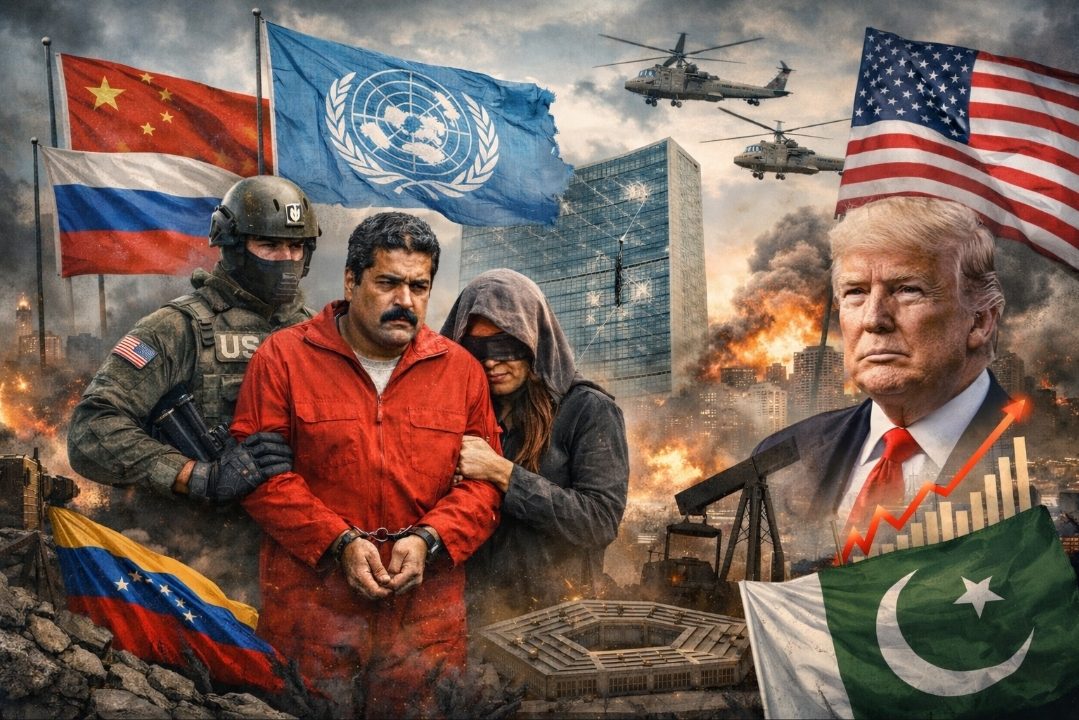
The reported capture of Venezuelan President Nicolás Maduro and his wife by the United States is not just a dramatic military episode; it is a turning point with serious political, economic and diplomatic consequences for the world. Such an action, if confirmed, challenges the basic principles of sovereignty and international law that govern relations between states.

Read also: US launches strikes inside Venezuela amid escalating Trump–Maduro standoff
First, this event is likely to sharpen divisions in an already polarized world. On one side, the United States and some of its close allies may justify the operation by citing criminal charges, security concerns or alleged links to illegal activities. On the other side, countries such as China, Russia, Iran, Cuba and several Latin American states are expected to strongly condemn the move as illegal regime change and a violation of Venezuela’s independence. Many countries in the Global South may see this as proof that international law is applied selectively, depending on power.
The world could split into two clear camps: one backing US actions under the banner of “justice and security,” and the other defending state sovereignty and warning that such precedents could be used against any weaker nation in the future. This division will deepen mistrust among major powers and make global cooperation even more difficult.
The United Nations will face a serious test. While countries like Colombia have already called for an emergency UN Security Council session, meaningful action may be blocked by vetoes from permanent members. The UN is likely to issue strong statements about restraint, protection of civilians and respect for international law, but its ability to reverse or punish such actions will remain limited. This will further expose the weakness of the UN system in dealing with conflicts involving powerful states.
For Pakistan, the situation is sensitive. Pakistan traditionally supports principles of sovereignty, non-interference and international law. Islamabad is unlikely to openly support the capture and will probably call for dialogue, restraint and resolution through international legal mechanisms. Pakistan may also be concerned about the precedent this sets, as it reinforces fears that powerful countries can act unilaterally against weaker states.
The economic impact could be significant. Venezuela holds vast oil reserves, and instability there can push global oil prices upward. Higher energy prices would hurt import-dependent countries like Pakistan, increasing inflation and pressure on foreign exchange reserves. Global markets may also react negatively to rising geopolitical risk, affecting trade, investment flows and overall economic confidence.
In simple terms, this event is not just about Venezuela. It reflects a world drifting toward power politics, where rules matter less than strength. The long-term cost could be greater instability, weaker global institutions and higher economic uncertainty for everyone.
About the Author