By Asim Shahzad
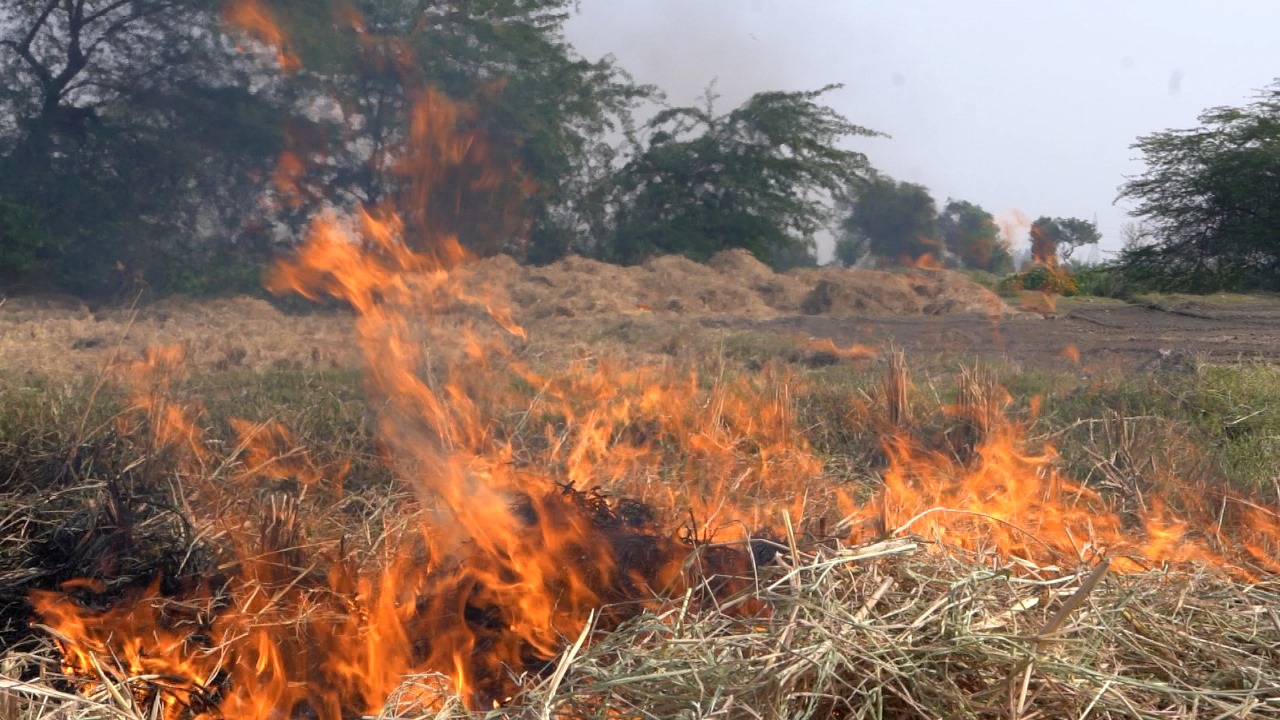
LAHORE: The Punjab government has reported a 70 per cent decline in stubble-burning incidents across the province following the establishment of 67 Quick Response Centres (QRCs) along major motorways and in key agricultural districts. The initiative, launched by Senior Minister Maryam Aurangzeb on the direction of Chief Minister Punjab Maryam Nawaz Sharif, marks a significant policy push to curb crop-residue fires and tackle the province’s annual smog crisis. Officials confirmed that QRC teams have so far extinguished fires across hundreds of acres of farmland.

Read also: Smog engulfs Punjab: Marriyum Aurangzeb claims situation improved despite AQI crossing 350
The province implemented a coordinated surveillance-and-response mechanism ahead of the harvesting season, integrating real-time monitoring with immediate field-level fire suppression. Authorities said the strengthened deployment of QRCs, supported by surveillance squads, has significantly enhanced Punjab’s capacity to detect and extinguish crop residue fires.
As part of the strategy, nine Surveillance Squads were deployed across eight designated beats, covering critical stretches of the M-2, M-3, M-4 and M-11 motorways and adjoining agricultural zones. Each squad consisted of an Inspector, a Field Assistant and a driver, operating round the clock in two shifts.
At the heart of the system are the 67 QRCs, each staffed with a driver, a firefighter and a helper, forming a three-member firefighting team. Every QRC is equipped with a 4×4 tractor towing a 6,000-litre fire bowser, fitted with a high-pressure water-monitoring gun capable of projecting water up to 120 metres. The off-road mobility of the tractor, combined with the extended-range firefighting gun, enabled teams to control fires rapidly even in difficult terrain.
Officials said this equipment allowed crews to respond within minutes to alerts, preventing crop fires from spreading and significantly reducing smoke emissions. The coordinated field operations, they added, have been instrumental in limiting environmental damage and improving air quality during the peak smog period.
To ensure full coverage of hotspot zones, the Punjab government distributed the 67 QRCs across key districts. Sheikhupura received the largest share with 22 QRCs, followed by Gujranwala and Sargodha with eight each, Faisalabad with six, Sialkot with five, Nankana Sahib with four, and Hafizabad and Kasur with seven each. Officials stated that concentrating QRCs in districts such as Sheikhupura—where agricultural burning has historically been high—allowed for swift deployment across vast tracts of farmland.
Authorities noted that the reduction in stubble burning this season represents one of the most substantial improvements in Punjab’s environmental management efforts. They added that the integrated system of surveillance and rapid response has now become a core component of the province’s broader strategy to combat winter smog, which is exacerbated by agricultural emissions, vehicular pollution and industrial activity.
About the Author