Anjum Nisar seeks wider consultation in PM’s Working Groups for fair policy reform
Share this:

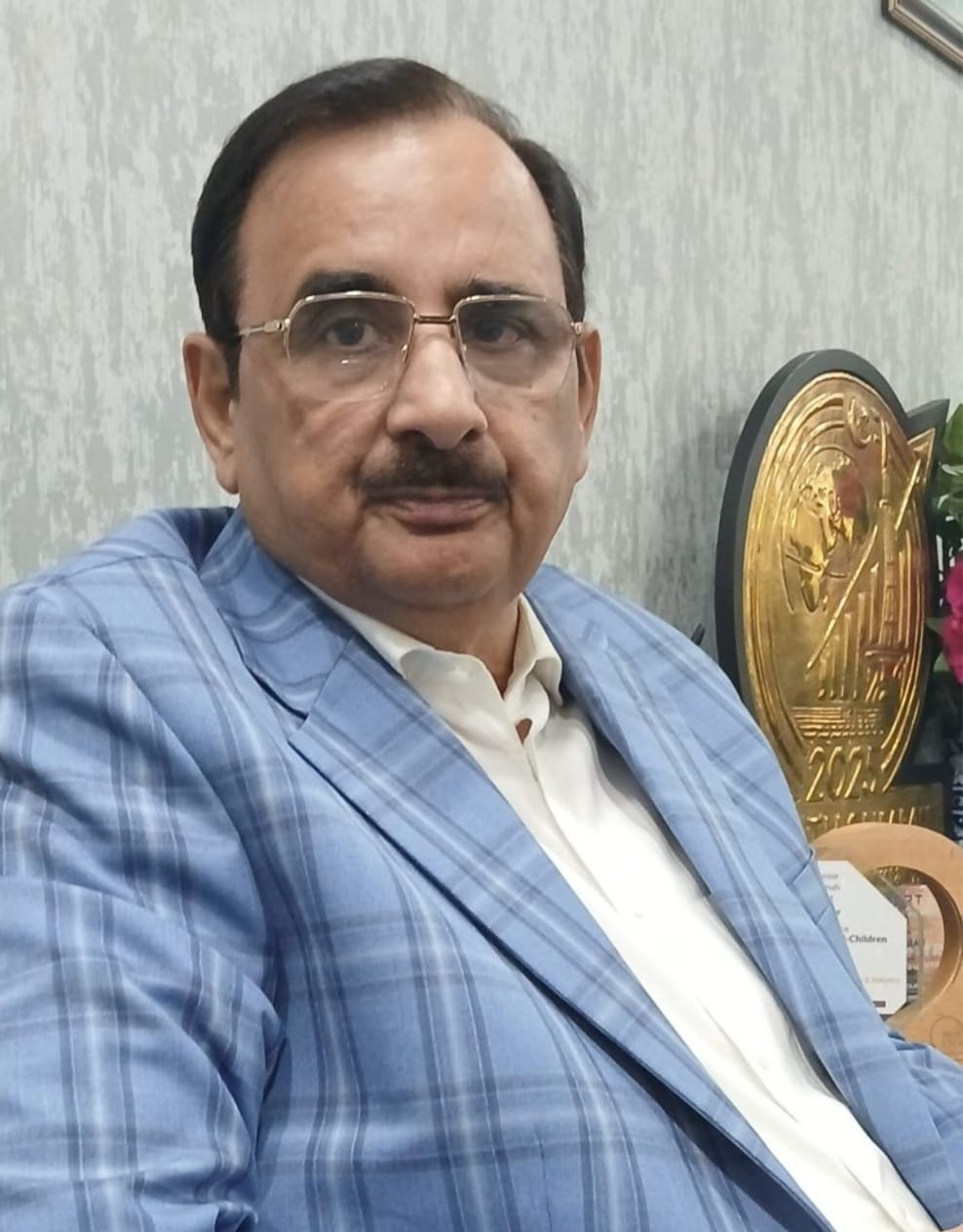
By Commerce Reporter
LAHORE, October 29: PIAF Chairman and former FPCCI President Mian Anjum Nisar has voiced concerns over the composition of newly formed government economic working groups and committees, calling for greater transparency and broader representation of trade bodies and industrial stakeholders.
Read also: INTERVIEW: Mian Anjum Nisar – Budget 2025–26 is directionless, lacks industrial Vision
Referring to the recent formation of high-level committees under the Prime Minister’s directives following his meeting with leading businesspersons, Mian Anjum Nisar said the government must avoid any conflict of interest, particularly in policy groups that include members from Independent Power Producers (IPPs) or dominant industrial players whose business decisions directly affect national economic outcomes.
He said the government’s initiative to engage private-sector professionals in policymaking is commendable, but limiting participation to a few well-connected individuals sends the wrong signal to the wider business community. “Real progress requires inclusion, not exclusivity,” he remarked, adding that key sectors such as textiles, steel, and SMEs—represented by organizations like APTMA and various chambers of commerce—must have a voice in these committees.
Mian Anjum Nisar noted that while many members of the current working groups have been part of the Prime Minister’s Economic Advisory Council for over a year, tangible results in export growth, industrial expansion, or energy cost reduction have yet to be seen. “Reappointing the same faces without measurable outcomes raises legitimate questions about accountability and performance,” he added.
The PIAF Chairman emphasized that policymaking should not revolve around a small circle of influential businessmen but should reflect the aspirations and challenges of the broader industrial base. He warned that decisions influenced by corporate self-interest, especially from sectors like IPPs, could compromise fair competition and undermine national economic goals.
He also urged the government to involve institutional representatives such as FPCCI, LCCI, and trade associations in policy consultation, arguing that collective wisdom produces more balanced and implementable economic solutions. “If the government truly aims for sustainable growth, it must bring all stakeholders to the table,” he said.
Mian Anjum Nisar concluded that while the formation of these committees is a step in the right direction, their credibility and success depend on transparency, balanced representation, and a genuine commitment to reform that benefits the entire business community—not just a privileged few.

Discover more from The Tribune
Subscribe to get the latest posts sent to your email.


