By Commerce Reporter
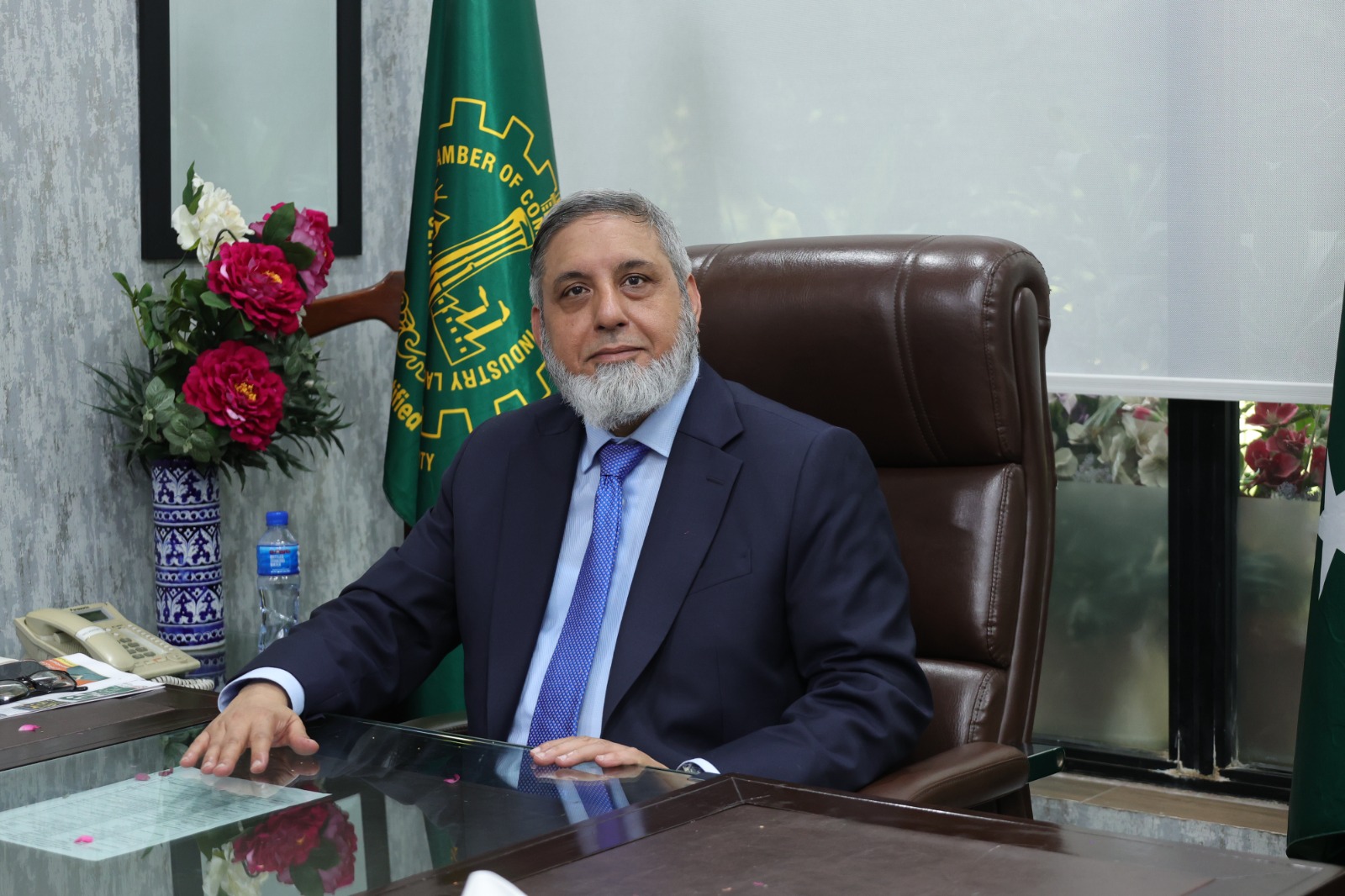
LAHORE — Lahore Chamber of Commerce and Industry (LCCI) Senior Vice President Tanveer Sheikh has expressed deep concern over Pakistan’s growing informal economy, warning that nearly half of the country’s economic activity remains undocumented and untaxed, which is severely undermining national growth, fiscal discipline, and social equity.

He said the informal sector, estimated at around 50 percent of the total economy, continues to expand unchecked due to weak enforcement, lack of incentives for documentation, and widespread tax evasion.
“This huge informal economy is not only distorting the real picture of national output but also limiting the government’s ability to mobilize resources for development and poverty alleviation,” he said.
Tanveer Sheikh emphasized that the Federal Board of Revenue (FBR) and relevant authorities must take urgent and pragmatic steps to broaden the tax net, integrate the undocumented sector, and promote a culture of compliance and transparency. “The documented sector is overburdened with taxes while the untaxed informal class continues to thrive without any accountability. This imbalance is unfair and unsustainable,” he remarked.
He pointed out that Pakistan’s tax-to-GDP ratio remains among the lowest in the region, hovering around 9 to 10 percent, primarily because of the size of the informal economy. “When half of the economy remains outside the tax net, the state is forced to squeeze the already compliant sectors, which discourages investment, increases the cost of doing business, and hampers industrial growth,” Sheikh said.
The LCCI Vice President lamented that while a small segment of society is spending lavishly on weddings, foreign trips, resorts, and luxury lifestyles, a large portion of the population continues to face poverty, unemployment, and inflation. “This dual reality is alarming. On one hand, we see extravagant spending and social media displays of wealth, and on the other, millions of Pakistanis struggle for basic necessities. This growing gap between the rich and the poor is socially and economically dangerous,” he warned.
He urged policymakers to introduce reforms aimed at documenting high-spending segments, such as real estate, retail, and services sectors, which contribute significantly to the informal economy. “If high-end consumer activities like luxury shopping, destination weddings, and foreign travel are properly taxed, the state can generate substantial revenue without burdening the salaried and industrial classes,” he added.
Tanveer Sheikh further stated that informal economic practices, including cash-based transactions, unregistered small enterprises, and underreporting of income, are depriving the government of billions in potential revenue. He called for a strong digital documentation drive supported by incentives, simplified registration processes, and protection for new taxpayers.
He said that the government must adopt a carrot-and-stick approach, offering facilitation, recognition, and tax benefits to those who come under the documentation regime, while penalizing those who continue to operate outside the system. “Without political will and consistency in policy, Pakistan will keep losing valuable fiscal space,” Sheikh asserted.
The LCCI Vice President also linked the rise of the informal economy to the weak regulatory enforcement and lack of trust between the public and state institutions. “Many people avoid documentation because they fear harassment, corruption, or policy inconsistency. The government must rebuild confidence through transparency, digitalization, and institutional reform,” he said.
He urged the authorities to ensure that every economic activity is traceable through digital payment systems, national databases, and verifiable tax records. “Digital documentation and cashless transactions are the future. Countries that have embraced them are witnessing rapid growth in tax compliance and governance efficiency,” Sheikh noted.
Tanveer Sheikh reiterated that Pakistan’s sustainable economic recovery depends on the integration of the informal economy into the mainstream. “Unless we expand the tax base and bring all income streams into the net, no IMF program, no foreign aid, and no temporary measure will ensure long-term stability,” he concluded.
He appealed to all stakeholders, including the government, private sector, and civil society, to play their part in promoting economic discipline, fair taxation, and financial transparency to ensure inclusive growth and reduce inequality in society.
About the Author