By Commerce Reporter
LAHORE, October 7, 2025— All Pakistan Textile Mills Association (APTMA) has expressed deep concerns over excessively high energy tariffs that are undermining Pakistan’s industrial viability and export competitiveness. The failure to ensure regionally competitive energy pricing is stalling economic recovery, deterring investment, and accelerating de-industrialization.

Read also: APTMA demands lowering of energy and interest rates
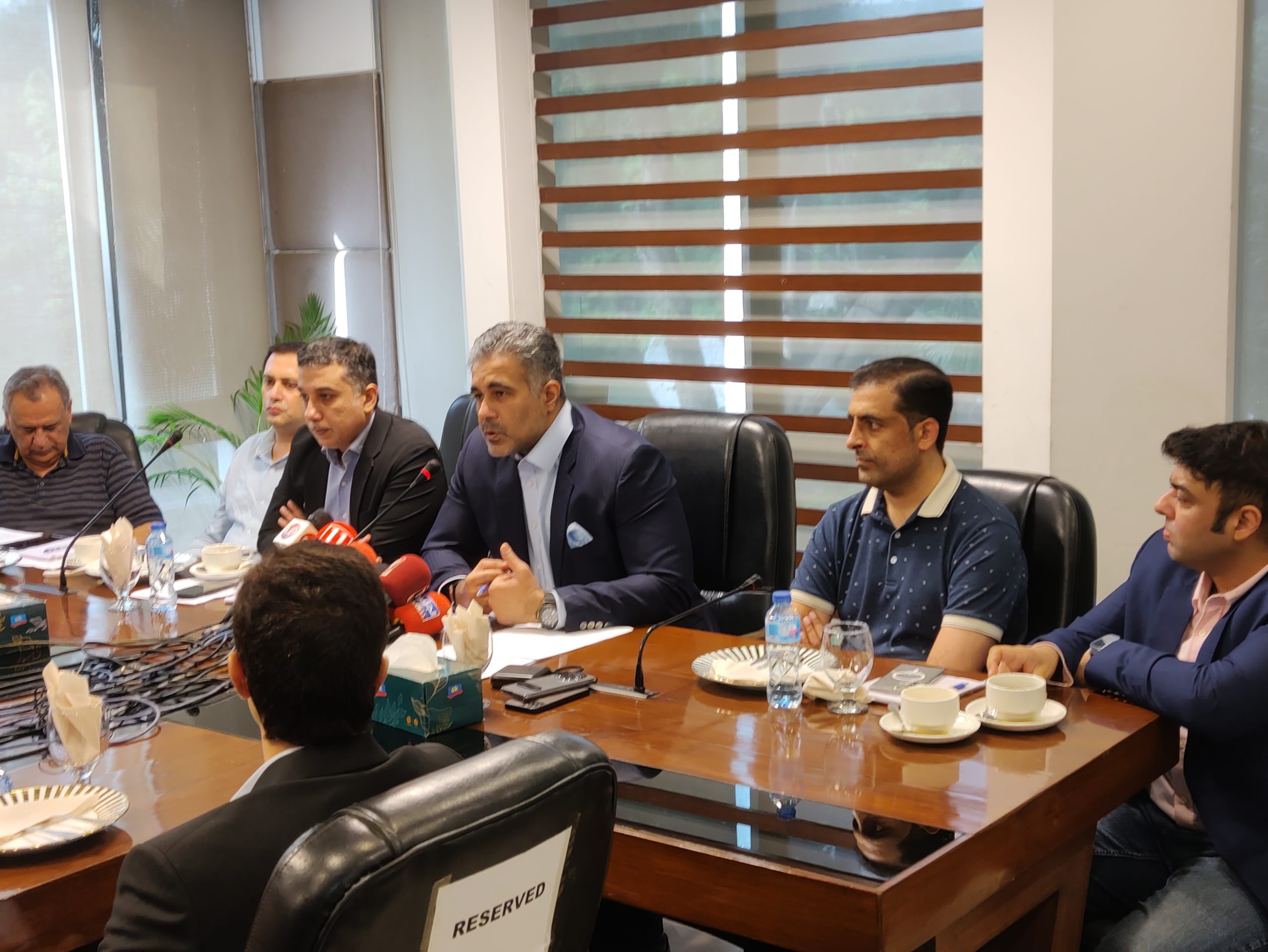
Addressing a press conference at APTMA House Lahore, Kamran Arshad Chairman APTMA flanked by Asad Shafi Chairman North, leading Textile exporters including Anjum Zafar, Faisal Jawed, S.M. Nabeel, Mohammad Ali , Sufyan Akhtar and Raza Baqir Secretary General said that despite categorical assurances at the highest levels that industrial electricity tariffs would be rationalized to less than 9 cents/kWh by April 2025, the tariff has moved in the opposite direction. Industrial electricity costs have increased from 10.4 cents/kWh in May 2025 to 11.7 cents/kWh in September, with further increases expected shortly. Industrial energy consumers in Pakistan continue to pay well above regional benchmarks of 5–9 cents/kWh in India, Bangladesh, China, and Vietnam.
Chairman APTMA said that the Ministry of Energy’s recent interventions, especially the arbitrary and miscalculated levy on gas for captive power and the push for grid transition have exacerbated problems rather than solutions. Many industrial units, particularly those operating high-efficiency combined heat and power (CHP) plants, were either unable to transition due to exorbitant costs for load enhancements and poor grid reliability or were forced to shut down efficient systems only to face frequent outages and voltage fluctuations on the grid while having to use even more gas in boilers.
Kamran said that the flawed approach by the government has also severely disrupted gas sector. The artificially created RLNG surplus—resulting from industrial demand destruction—is being diverted to domestic consumers at an $8/MMBtu subsidy, while industry has been priced out at $16/MMBtu. As a result, local gas production has declined, with OGDCL alone projecting losses exceeding $378 million. Exploration activity has also collapsed under the current policy regime—no bids were received for 22 out of 23 oil and gas exploration blocks in the most recent petroleum licensing round. The gas circular debt has now crossed Rs. 2.6 trillion, a crisis worsened by policies that have neither fiscal nor commercial logic.
Kamran voiced concerns about harassment of exporters by FBR functionaries. He expressed surprise that only compliant corporate sector is being subjected to surprise raids, seizure of records, and illegal demands and undue pressures. He requested FBR to refrain from such malpractices and focus only on undocumented and non-compliant sector.
APTMA Chairman highlighted that the industrial cost of electricity is inflated by a cross-subsidy of over Rs. 130 billion annually. The actual cost of service to industrial users is around 8–9 cents/kWh, yet they are charged significantly more to sustain a subsidy regime that is becoming increasingly untenable. It appears the government has opted for a policy of providing free or heavily subsidized electricity at the cost of collapse of industry causing massive unemployment and economic melt down.
Asad Shafi Chairman North said that the Competitive Trading Bilateral Contract Market (CTBCM) is another example of lack of practical engagement with industrial realities. Wheeling charge of Rs. 12.55/kWh, along with added premiums, renders bilateral power purchase financially unviable, especially with hybrid consumption from the grid is charged at the marginal cost. The cap of 800MW further restricts industry’s access to the open-market, necessitating hybrid power consumption.
Shafi added that effects of high energy tariffs are reflected in Pakistan’s macroeconomic indicators: stagnant exports, subdued industrial activity and lack of new investment—particularly in export-oriented manufacturing. The recent revelation of an $11 billion discrepancy in trade figures over two years has raised serious questions about the integrity of the country’s data reporting mechanisms.
Leading textile exporters reiterated that Pakistan’s exporters cannot compete in international markets while facing some of the highest energy costs and most hostile operating conditions in the region. Exporters here are subjected to double interest rates, double taxation, higher tax rates than those selling in the domestic market, and repeated, arbitrary levies that lack any economic justification. Tax refunds remain delayed and inconsistent, while businesses are routinely subjected to harassment from tax authorities instead of facilitation.
APTMA urged the Government to fulfill its commitment of providing industrial electricity at regionally competitive rates. Likewise, industry must be granted non-discriminatory access to gas at the actual cost of RLNG, without being forced to subsidize other sectors.
APTMA leadership added that competitive energy pricing regime will unlock the full potential of Pakistan’s manufacturing sector. Restoration of regionally competitive energy tariff will lead to increased exports, more jobs, higher investment, and greater tax revenues. The textile industry alone has the capacity to export $25 billion annually but realizing this is impossible without competitive energy prices. Enabling industry to thrive should thus not be seen as a concession but rather a prerequisite for sustainable and inclusive economic growth.
About the Author