
By Our Correspondent
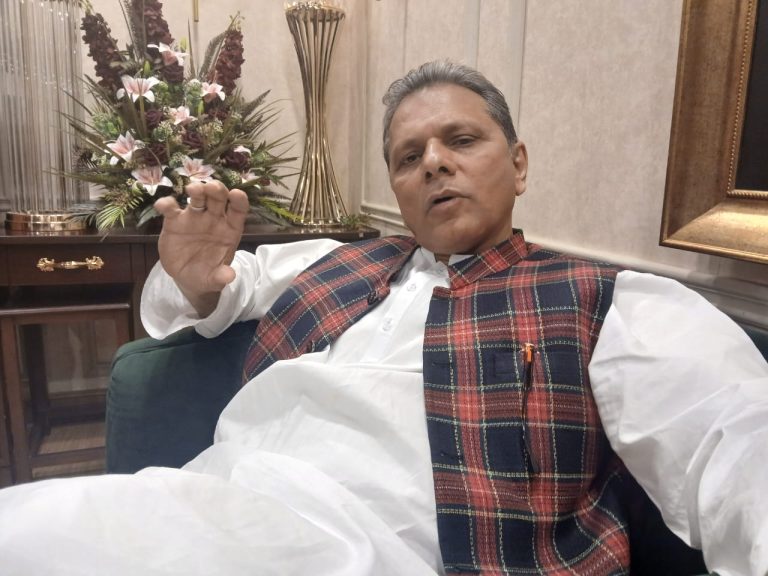
Something special is happening between Ethiopia and Pakistan, and it’s being led by a truly remarkable diplomat H.E. Ambassador Dr. Jemal Beker Abdula. He is not just a diplomat; he is a visionary Ambassador, writing a new chapter that is already inspiring young people in Pakistan and across Africa.
To hear his story and understand the passion behind his vision, The Tribune International sat down with the man himself. On this weekend, we spoke with HE Dr. Jemal Beker Abdula, the Special Envoy and Ambassador of the Federal Democratic Republic of Ethiopia to the Islamic Republic of Pakistan and three Central Asian states: Turkmenistan, Kyrgyz Republic and the Republic of Tajikistan.
Let’s explore together his personal mission to build a deeper connection between people, not just governments of our two great nations. In this exclusive interview, we will uncover the unique challenges and exciting opportunities that are shaping the future of this vibrant new partnership.
Q1: Excellency, how do you assess the current state of relations between Ethiopia and Pakistan, and what major areas of cooperation do you see in the coming years?
Ambassador Jemal Beker Abdula: Our bilateral relations are at an excellent level. Our two great nations are closer now than ever before, mainly due to extensive engagement between our governments and our people.
Since my appointment in 2022 as Ethiopia’s first Ambassador to this beautiful nation, our bilateral relations have seen a visible transformation. Over the last three years, we have not only deepened our bilateral relations but also strengthened multilateral cooperation. On the global stage, Pakistan supported Ethiopia against politically motivated sanctions at the United Nations, and in return, Ethiopia backed Pakistan’s bid for a non-permanent seat on the UN Security Council.
At the bilateral level, connectivity and mobility have increased significantly with the launch of Ethiopian Airlines operations between Addis Ababa and Karachi. We have also seen a rapid exchange of delegations across key sectors, including defense, economy, trade, investment, health, environment, and science and technology. The foundation laid by the Ethiopian Embassy in Islamabad has begun to take shape, marking a vibrant new era of cooperation.
Both sides have signed a political consultation agreement that provides a comprehensive framework for deepening collaboration in areas such as peace and security, climate change, aviation, trade, investment, agriculture, science and technology, culture, and tourism. We also finalized agreements on trade, investment, and science and technology.
In 2023, the Ethiopian Embassy in Islamabad mobilized and coordinated a 75-member business delegation from Pakistan to Ethiopia. In a gesture of friendship, Ethiopia also sent a high-level delegation of officials and businessmen to Pakistan, which initiated numerous exchanges in other areas like environment, forestry, health, and education. We recently welcomed a delegation of Ethiopian climate experts and youth leaders who toured Islamabad, Lahore, and Karachi to share experiences with Pakistan, which is a minimal contributor to carbon emissions. I would like to take this opportunity to express my gratitude to the government and people of Pakistan for promoting bilateral cooperation under our Prime Minister H.E. Dr. Abiy Ahmed’s Green Legacy Initiative. This initiative has completely transformed Ethiopia’s economic, social, and environmental landscapes with the planting of over 41.2 billion seedlings, addressing land degradation, food insecurity, and poverty.
Looking ahead, both nations face similar challenges, such as climate change and untapped export markets, yet we share tremendous opportunities. I am looking forward to the growth in peace and security, trade and investment, aviation, climate change agriculture, textiles, tourism, clean energy, and services. With continued efforts, our cooperation will not only expand but also inspire new models of South-South collaboration.
Q2: Pakistan and Ethiopia are both emerging economies with strong agricultural bases. What steps can be taken to enhance bilateral trade and investment, particularly in agriculture, textiles, and pharmaceuticals?
Ambassador: Agriculture is central to both our economies. Pakistan has advanced expertise in textiles and pharmaceuticals, while Ethiopia offers fertile lands and diverse agricultural products. By establishing joint ventures, knowledge-sharing platforms, and agricultural modernization initiatives, both countries can strengthen food security and create new export avenues.
We are also exploring avenues to expand bilateral trade volume, which currently stands far below the optimum level. Clean energy and green technologies are other critical areas where cooperation will be mutually beneficial. Therefore, concerted efforts are underway to exploit the full potential bilateral cooperation in those significant areas through joint research and development, delegations exchange, capacity building and technology transfer on both sides.
Q3: With Ethiopia being a landlocked country and Pakistan offering deep-sea access through Gwadar Port, do you see a future where Ethiopia could use Pakistan as a trade gateway to Asia?
Ambassador: Absolutely. This is a vision we are keen to materialize. Pakistan’s strategic location and Gwadar Port provide Ethiopia with a gateway to the wider Asian market. Such a corridor would also strengthen connectivity between Africa and Asia, unlocking immense trade opportunities.
We are already encouraging policymakers and investors from both sides to view this as a long-term project that could reshape the trade landscape. Besides, I am also appointed as an Ambassador and Special Envoy to three other central Asian states that reflects our commitment to connect Africa with Asia through Ethiopia. To this end, the major instrument for us is the Ethiopian Airlines that have started its operations in Pakistan and soon connect with the central Asian states to increase Ethiopia’s outreach across Asia. We are in Pakistan with a bold and clear vision and that is to promote south-south cooperation for equitable and sustainable development across the developing countries.
Q4: Ethiopia is often called the birthplace of coffee and has vast fertile land, while Pakistan is also an agricultural country. How can both nations collaborate to achieve food security and agricultural modernization?
Ambassador: Ethiopia has a proud legacy as the origin of coffee and continues to be one of the world’s leading coffee exporters. Pakistan, on the other hand, has a robust agricultural base.
Through collaboration in research, irrigation techniques, and food-processing industries, we can build a win–win partnership. Pakistan already exports some of its agricultural products to Ethiopia, but the potential is much greater. To further strengthen our cooperation in the areas of food security, the Ethiopian Embassy is working diligently to establish institutional linkages between the two nations. To this end, the Ethiopian Embassy Islamabad in collaboration with the Ministry of National Food Security and Research, and the National Agriculture Research Center organized a food security conference in Islamabad that brought together agricultural experts from both sides to exchange knowledge and their experiences. Pakistan’s Ministry of Food Security has expressed keen interest in the model of the Green Legacy Initiative in achieving the food security, and efforts to this end are underway. I firmly believe that with the closer cooperation, we can collectively contribute to food security not only for our countries but also for the wider region.
Q5: The Horn of Africa has witnessed geopolitical challenges, while South Asia faces its own conflicts. How do you think Pakistan and Ethiopia can support each other in promoting peace, stability, and regional cooperation?
Ambassador: Both our nations understand the costs of instability, and are the largest contributor to the UN peacekeeping missions across the world. Our soldiers are dying together to ensure that everybody enjoy endurable peace. Our both nations are on the same page vis-à-vis international peace and security. But, we face a common enemy of misinformation and disinformation. An information war has been imposed upon us by the invisible hands and for that matter, it has become crucial to join forces to deal with the common enemy. We must must educate our citizens about propaganda and the forces that seek to divide societies.
Teaching people the difference between genuine well-wishers and those sowing seeds of hatred is essential. Ethiopia and Pakistan can share experiences in countering misinformation, building resilience, and promoting inclusive development. Together, we can support peace and stability not just in our regions but globally.
Q6: Excellency, people-to-people contacts remain limited between our two nations. Do you foresee student exchanges, cultural diplomacy, and tourism cooperation playing a larger role in strengthening ties?
Ambassador: Certainly. No relationship can reach its full potential without strong people-to-people contacts. We are working to expand scholarships, student exchanges, cultural programs, and tourism cooperation.
Direct flights by Ethiopian Airlines between Addis Ababa and Karachi have already opened new avenues for cultural exchange and tourism. Over the next decade, we want thousands of students, tourists, and professionals to move between our countries, creating bonds that transcend diplomacy.
Q7: Both Pakistan and Ethiopia are highly vulnerable to climate change. What joint strategies or partnerships could be developed between the two countries in renewable energy, green technologies, and climate resilience?
Ambassador: Climate change is a shared threat to our survival. Ethiopia has invested heavily in renewable energy, particularly hydro and wind power. Pakistan, too, is advancing in solar and hydropower. By pooling our experiences, we can pioneer sustainable energy solutions for the Global South.
Joint research centers, technology transfers, and clean energy projects could pave the way for green growth and resilience. Both countries can also advocate for climate justice at global forums, ensuring fair financing for developing nations.
We are committed to support Pakistan’s fight against climate change. I would like to use your platforms to send a message to every Pakistani that Pakistan is not alone in its fight; Ethiopia is standing firmly with its brothers and sisters to deal with the shared challenge.
The launch of the “Plant Fraternity” initiative of our government in Pakistan is manifestation of our unwavering commitment to Pakistan’s fight against climate change. Likewise, Ethiopia absolutely supports and backs Pakistan’s call for climate justice at various international climate forums such as COP27, COP28 and COP29.
Together, we can overcome this unsurmountable challenge and the cooperation is only key to this unfolding crisis of climate changes which we are witnessing in Pakistan in form of floods.
Q8: Ethiopia is one of the fastest-growing economies in Africa. What message would you like to give to Pakistani investors and entrepreneurs about opportunities in Ethiopia’s industrial parks, infrastructure, and services sector?
Ambassador: My message to Pakistani investors is simple: Ethiopia is open for business. We have world-class industrial parks, competitive labor, and access to African and global markets through trade agreements. Sectors such as textiles, leather, pharmaceuticals, agro-processing, and infrastructure are ripe with opportunity, especially after the two phases of home grown economic reforms undertaken by our Prime Minister H.E. Dr. Abiy Ahmed to address the macroeconomic imbalances and forex exchange rates, besides increasing productivity and job creation.
I encourage Pakistani entrepreneurs to come, explore, and partner with Ethiopian businesses. The Embassy of Ethiopia in Islamabad is closely working in collaboration with all the business chambers of Pakistan and trade associations to facilitate such connections.
The 5th Pakistan-Africa Trade Development Conference & Single Country Exhibition (PATDC & SCE), East African Countries, is going to be held in Addis Ababa, from October 16-18, 2025. My message to Pakistan entrepreneurs and businessmen to take part in the event which will serve as a gateway to Africa.
Q9: Both Ethiopia and Pakistan are part of the Global South. How can countries like ours work together to build stronger voices at global forums such as the UN, WTO, and climate summits?
Ambassador: The Global South must speak with one voice. Whether on trade, climate, or peace, our challenges are similar. By coordinating our positions at the UN, WTO, and climate summits, Ethiopia and Pakistan can amplify their influence. Our cooperation should not be limited to bilateral issues but must extend to multilateral platforms, where we advocate for equitable global governance and fair opportunities for developing nations.
Q10: Finally, Excellency, if you look ahead 10 years, where do you see Pakistan–Ethiopia relations standing, and what legacy would you like to leave as Ethiopia’s Ambassador to Pakistan?
Ambassador: I envision Pakistan–Ethiopia relations in 10 years as a vibrant partnership, strengthened by regular political consultations and flourishing trade in textiles, machinery, coffee, and pulses. Direct flights will further boost business and tourism, while cultural and educational programs will deepen ties. We are actively working on establishing direct banking channel between our nations which will transform our trade relations to the highest degree. If I am remembered for anything, I would like it to be as the Ambassador who helped build a bridge between Ethiopia and Pakistan—one that will endure for generations.
Q11 : Excellency, is there anything more you want to add further?
“Ethiopia and Pakistan are bound by shared values, common challenges, and enormous opportunities. I strongly believe the coming decade will transform our partnership into a vibrant model of South–South cooperation. By strengthening trade, investment, cultural exchange, and people-to-people ties, our two nations can achieve mutual prosperity and contribute to peace and stability in our regions and beyond. My hope is to see Ethiopia and Pakistan connected not just by diplomacy, but by friendship and lasting collaboration.”
Recognition of his work
HE Dr Jemal Beker Abdula, Ethiopia’s Ambassador Extraordinary and Plenipotentiary to Pakistan, has played a pivotal role in elevating bilateral ties. Since opening Ethiopia’s mission in Islamabad, he has spearheaded key initiatives: launching Ethiopian Airlines operations in Karachi, organizing trade delegations, and facilitating MOUs in commerce, health, and science. His achievements garnered multiple accolades, including the Best Ambassador title by the Islamabad Chamber of Commerce and Industry, the Global Ambassador Award from Diplomatic Insight and special recognition from the National Peace and Justice Council and COMSTECH for strengthening government, business, and people-to-people links between the two countries. Ambassador Dr. Beker also champions environmental causes through Ethiopia’s Green Legacy initiative, extending it to Pakistan via tree-planting and clean-up campaigns. To this end, the University of Sialkot honored him with an Award of Environmental Stewardship Award.