
By Commerce Reporter
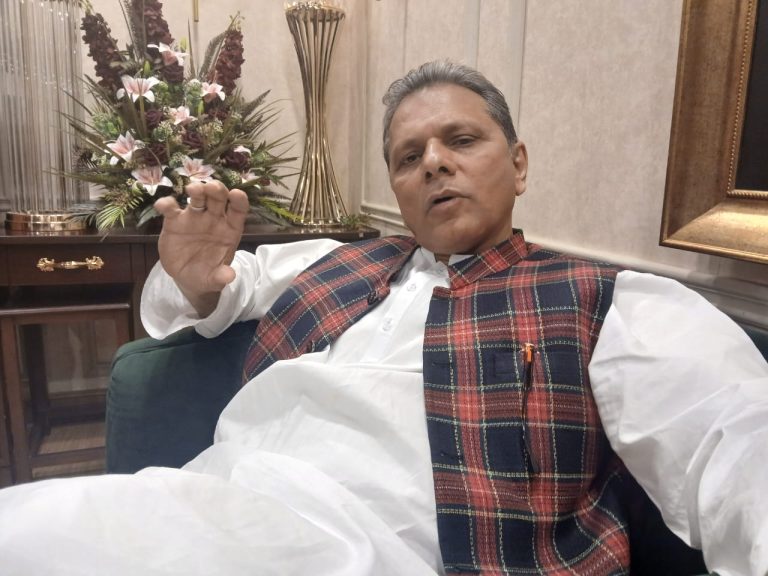
Khadim Hussain, Member Board of Directors at Pakistan Stone Development Company, Senior Vice President Ferozepur Road Board, and Former Executive Member of LCCI, urges the government to prioritize economic stability through reduced interest rates, supportive tax reforms, and industry-focused policies.
Read also:Pakistan needs urgent FDI strategy overhaul to match regional economic growth: Khadim Hussain
Khadim Hussain has strongly advocated for a significant reduction in Pakistan’s policy rate, pointing out that it remains far higher than in neighboring countries. According to him, this discourages investment and slows down business activity. He emphasized that inflation is falling, the exchange rate is stable, and external accounts have improved — all clear signs that the time is right for a rate cut of at least 100 basis points in the upcoming monetary policy meeting.
On fiscal policies, he expressed concern over the recently imposed tax on transactions above Rs. 200,000, calling it anti-business and a move that would cripple commercial activity. He criticized the unchecked powers given to the FBR under Section 37AA, demanding consultation with stakeholders instead of coercion.
He warned that such decisions only increase mistrust and push businesses away from documentation.
Discussing recent technological reforms, Khadim welcomed the AI-based Customs Clearance and Risk Management System introduced by the FBR. He described it as a positive step toward transparency and efficiency, provided it’s implemented properly.
He stressed the importance of pilot testing and careful rollout, citing past failures like the IRIS system.
He also highlighted the vast but underutilized potential of Pakistan’s marble and precious stones industry.
According to him, these natural resources are being exported in raw form at throwaway prices. He called for an immediate ban on the export of raw materials and urged the government to develop the sector properly, noting it could bring in billions of dollars in foreign exchange and help pay off foreign debt.
When it comes to the broader economic picture, Khadim criticized inconsistent and ad-hoc policymaking.
He noted that despite favorable conditions in the stock market and cash availability, the privatization process has failed to gain momentum due to lack of direction and political will.
Commenting on speculation about a possible mini-budget, he said the government’s behavior indicates it is on the cards.
This, he warned, would cause further panic and damage to business confidence. He stressed that export industries need incentives and relief rather than additional burdens.
On FBR reforms, Khadim praised the Prime Minister’s initiative to bring in third-party validation through global firms. He called this a long-standing demand of stakeholders and stressed that for reforms to succeed, there must be consistency and strict oversight. He also urged the introduction of a simple, digital tax return system to minimize human interaction and curb corruption.
Khadim Hussain concluded by urging policymakers to engage with the business community, develop consistent and investor-friendly policies, and take bold decisions to unlock Pakistan’s full economic potential. What the country lacks, he said, is not capability — but will and continuity.