
“We are committed to inclusive, transparent, and action-driven leadership”
By Senior Journalist & Business Correspondent
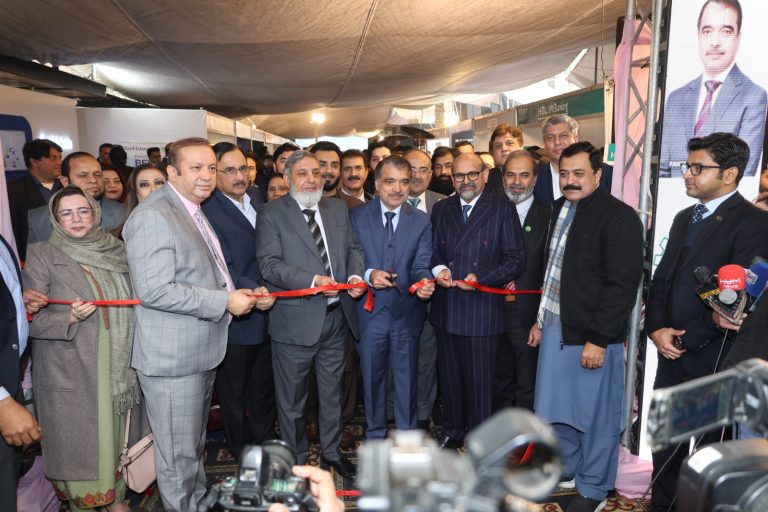
LAHORE: Known for his commitment, professionalism, and proactive approach, Khalid Usman, the Senior Vice President of the Lahore Chamber of Commerce and Industry (LCCI), has emerged as a strong and steady voice for the business community of Lahore. In this exclusive interview, Mr. Usman shares insights into his leadership journey, the Chamber’s recent initiatives, and his vision for the future.
Q: Mr. Khalid Usman, thank you for your time. Let’s begin by asking how your journey has been so far as Senior Vice President of LCCI?
Khalid Usman: Thank you. The journey has been deeply engaging and full of learning. Serving as SVP at LCCI is both a responsibility and a privilege. From day one, I made it a point to remain approachable, solution-oriented, and accountable to our members. I’ve worked closely with my team to ensure that every issue—whether small or large—is addressed efficiently. My focus has been to strengthen institutional responsiveness and represent every segment of the business community.
Q: What do you think distinguishes your approach as SVP?
Usman: Transparency, accessibility, and teamwork. I don’t believe in sitting in isolation behind closed doors. My office has remained open to all members of the business community—whether it’s a small trader, an exporter, or an industrialist. I believe that effective representation only happens when you listen directly to the stakeholders. We have maintained a strong presence on the ground, engaged with all relevant government departments, and built bridges between the Chamber and public institutions.
Q: Can you highlight some key problems LCCI has addressed under your leadership recently?
Usman: Certainly. One of our top priorities was resolving issues related to excessive utility billing, especially from LESCO, which affected many small and medium enterprises. We engaged with the relevant authorities and succeeded in getting several overbilling and disconnection cases reversed.
We also worked with the Federal Board of Revenue (FBR) to address delays in income tax and sales tax refunds, which had blocked the working capital of many exporters and manufacturers. We advocated for smoother refund mechanisms and provided a platform for our members to voice their grievances directly.
Additionally, we supported businesses dealing with customs and import clearance bottlenecks, and helped resolve licensing delays through coordination with the Punjab government.
Q: You’ve been praised for being approachable. How do you maintain strong contact with the business community?
Usman: The business community wants immediate and real support. I make sure that every call, complaint, or request is taken seriously. We hold regular consultative meetings with market associations, industrial zone representatives, and sector-specific bodies. I’ve also made it a habit to conduct field visits and attend traders’ meetings personally. When they see you listening, they begin to trust you—and that trust becomes the foundation of meaningful reform.
Q: The business community has been facing serious economic challenges. How is LCCI responding under your leadership?
Usman: That’s true. Economic conditions are tough, with inflation, rising energy costs, and high interest rates hurting businesses. LCCI has taken a policy-driven approach—we’ve submitted detailed proposals to the government on reducing the cost of doing business, rationalizing taxes, and improving the regulatory environment. We’ve also emphasized austerity in government spending and encouraged investment in SMEs and exports. Our role is to push for reforms that make business easier, fairer, and more profitable.
Q: How do you see LCCI’s evolving role in shaping economic policies in Punjab and beyond?
Usman: LCCI must continue evolving as a policy influencer and a partner in progress. Beyond resolving individual problems, we are now focusing on research-based advocacy, digital transformation, and capacity building of our members. We’ve enhanced our liaison with provincial and federal institutions to shape policies on taxation, trade, industry, and infrastructure. We’re also engaging international partners for trade facilitation, B2B linkages, and investment opportunities.
Q: Do you have any special initiatives underway at LCCI?
Usman: Yes. We are developing a digital helpdesk to register and resolve complaints quickly and transparently. We’re also enhancing our training programs for startups, women entrepreneurs, and family businesses. Our aim is to create a more inclusive and knowledge-driven chamber. We’re also working on a plan to promote green practices and sustainable business models through awareness campaigns and technical assistance.
Q: What personally motivates you to keep working so diligently for the Chamber and the business community?
Usman: It’s the sense of duty and accountability. I come from the business community—I’ve seen the challenges up close. When someone walks into my office with a crisis and leaves with a solution, that sense of service is unmatched. I don’t see this as a position—I see it as a responsibility to deliver and improve lives.
Q: Finally, your message for the business community of Lahore and Punjab?
Usman: Stay hopeful and united. LCCI belongs to you, and I am here to serve you. Let us continue building trust, raising our voice together, and demanding policy changes that benefit everyone. My doors remain open, and I assure you that your voice will always be heard at the highest levels. Together, we will continue to drive Lahore and Punjab’s economy forward.
Conclusion:
With his grounded leadership, strong communication, and unwavering dedication, Khalid Usman has emerged as a key pillar of LCCI’s dynamic leadership team. As Senior Vice President, his commitment to accessibility, accountability, and innovation reflects the changing face of business politics in Pakistan—one rooted in service, action, and inclusive growth.