By Asim Shahzad
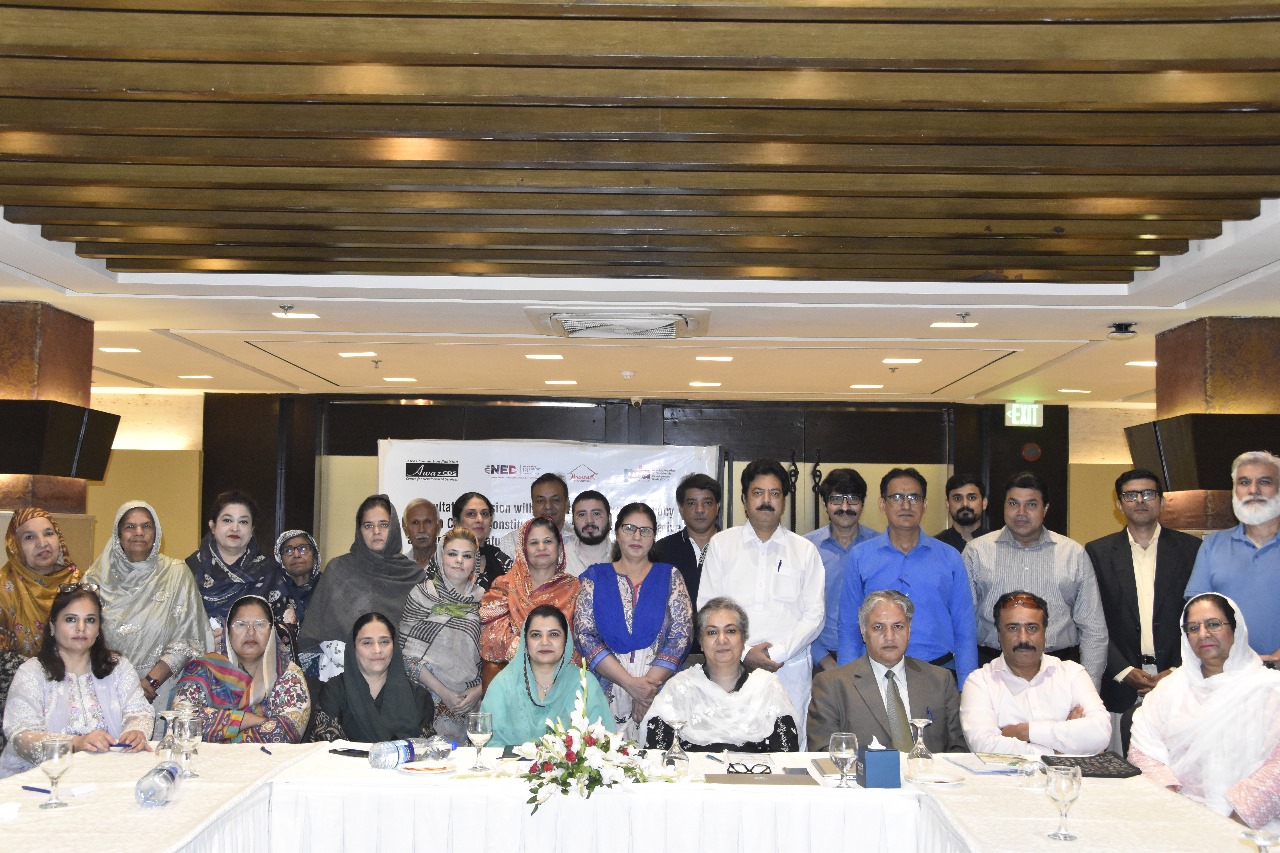
HomeNet Pakistan, AwazCDS-Pakistan, and the Pakistan Development Alliance (PDA) jointly organized the Second Consultative Session on local governance, bringing together a diverse group of stakeholders—including civil society members, legislators, media professionals, lawyers, and NGO representatives—to deliberate on the current constitutional, political, administrative, and financial challenges confronting local governments in Pakistan.
Held at a local hotel in Lahore, the session featured in-depth presentations and dialogue based on recent research identifying significant structural and fiscal gaps in local governance systems.

Umm Laila Azhar, Executive Director of HomeNet Pakistan, presented key findings from a study that exposed serious fiscal deficiencies affecting the effectiveness of local governments. She emphasized the urgent need to enhance transparency and accountability mechanisms at the grassroots level to improve governance outcomes.
Prominent civil society activist and Supreme Court lawyer Ishtiaq Ch delivered a powerful address outlining five major constitutional and legal violations that continue to erode the authority and effectiveness of local governments. He called for robust constitutional reforms, transparent budgetary procedures, and the institutionalization of Provincial Finance Commissions (PFCs) with clearly defined timelines to ensure equitable and timely fiscal transfers.
The event was attended by several notable figures, including Salman Abid, Shah Hussain Network, Muhammad Sajid Ali, members of the Punjab Assembly, and media and civil society representatives. Punjab Assembly Member Ms. Sumbal Malik pledged to raise these critical issues within the legislature and proposed the formation of a dedicated roundtable discussion with fellow lawmakers to further explore necessary reforms.
Representing the local government sector, Mr. Dewan Sahib reaffirmed his commitment to engaging with senior government officials to advocate for the full and effective implementation of local governance laws.
The session marked another step forward in the collective push to bridge institutional gaps and to promote a more functional, inclusive, and accountable local governance system across Pakistan.
About the Author