By Asim Shahzad
LAHORE: The Punjab University Academic Staff Association and Federation of All Pakistan Academic Staff Association Punjab Chapter held a joint press conference at the Committee room of the University Club to condemn the federal government’s decision to revoke the longstanding tax rebate for researchers and teachers.

Read also: Ethiopia, Pakistan discuss vilateral cooperation in Higher Education
They demanded Chief Minister Maryam Nawaz to increase budegtray allocations for the varsities of the province.
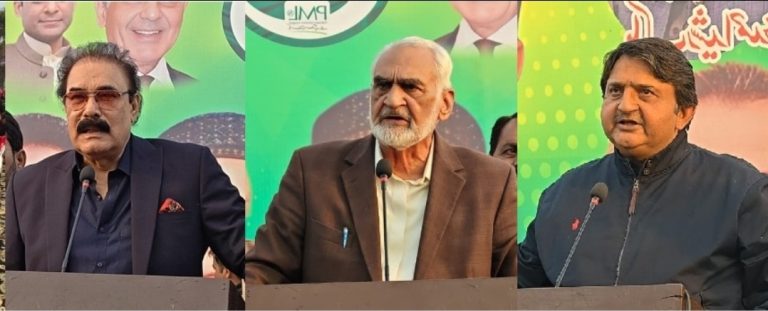
The meeting was presided over by PU ASA President and former FAPUASA president Prof. Dr. Amjad Abbas Khan Magsi, while FAPUASA Balochistan president Prof Dr Kaleem Ullah Bareach, FAPUASA Punjab president and PU ASA secretary Dr Muhammed Islam, vice president ASA Dr Ghalib Atta and Prof Dr Noman Aftab, president GCU ASA were present.
The FAPUASA and ASA leaders expressed serious concern over the meager funding and tax issues of the universities of Punjab province. Dr Amjad Magsi said, “Despite of being the largest province and more number of universities 51 in Punjab only Rs 18 billion have been fixed as recurring grant while Sindh province that has less er 32 varsities, more than double grant Rs 42 billion have been allocated there.
The press conference demanded the Punjab chief minister Maryam Nawaz for an immediate revision of allocation of recurring grants for the public sector universities in Punjab province.
This tax rebate was originally introduced by the Musharaf Government in 2006 at 75%, aimed at promoting research and academic retention. It was reduced to 40% by the PML-N government in 2013, and now the PML-N government is abolishing it completely, a continuation of policies that show longstanding disregard for the academic community.
The rebate was never a luxury; it was a lifeline for university faculty and researchers who routinely pay out of pocket for journal publication fees, chemicals, fieldwork, and academic travel. Its abolition will demoralize scholars, reduce research productivity, and accelerate brain drain, weakening Pakistan’s academic future.
This assault comes amid a broader financial crisis in higher education. Despite the federal budget growing from PKR 5.9 trillion in 2018 to PKR 17.5 trillion in 2025, a 196% increase, the recurring grant for higher education has remained frozen at just PKR 65 billion. Meanwhile, the number of public universities has grown from 126 to 160, and operating costs, salaries, pensions, utilities, have skyrocketed.
According to the Economic Survey of Pakistan, the country is spending only 0.8% of its GDP on education overall, and a mere 0.37% on higher education in the current fiscal year. This is well below the UNESCO-recommended 4–6%, and far behind regional peers like India and Bangladesh. Shockingly, both PML-N and PPP had committed in their election manifestos to increase education spending to 4% of GDP, but have failed to honour those promises while in power.
About the Author