By International Desk
June 22, 2025
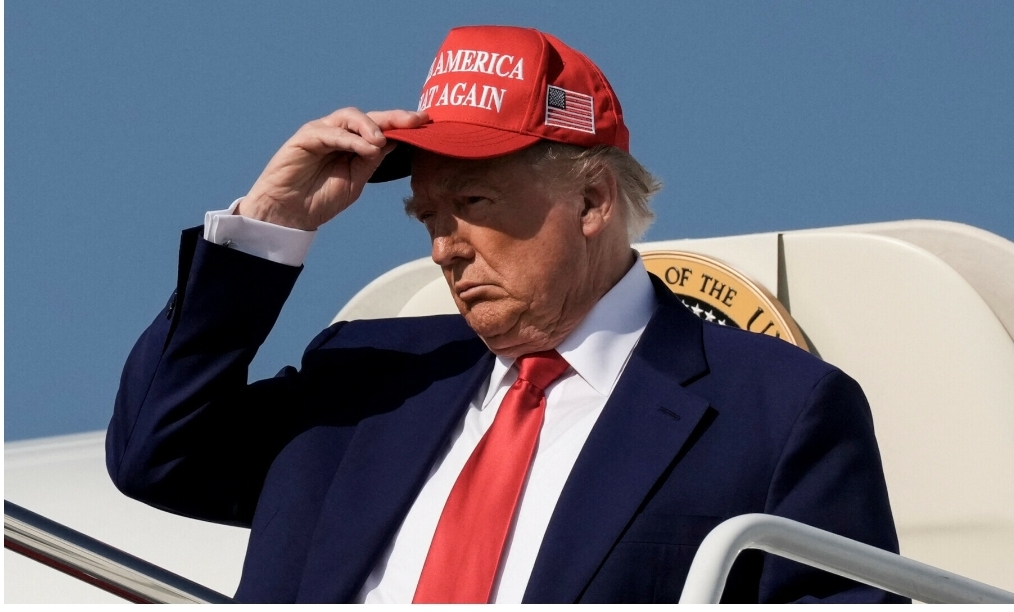
Washington/Tehran – Former U.S. President Donald Trump announced that the U.S. military has successfully carried out targeted airstrikes on three Iranian nuclear facilities, including the underground enrichment site at Fordow, as tensions in the Middle East reach a dangerous peak.

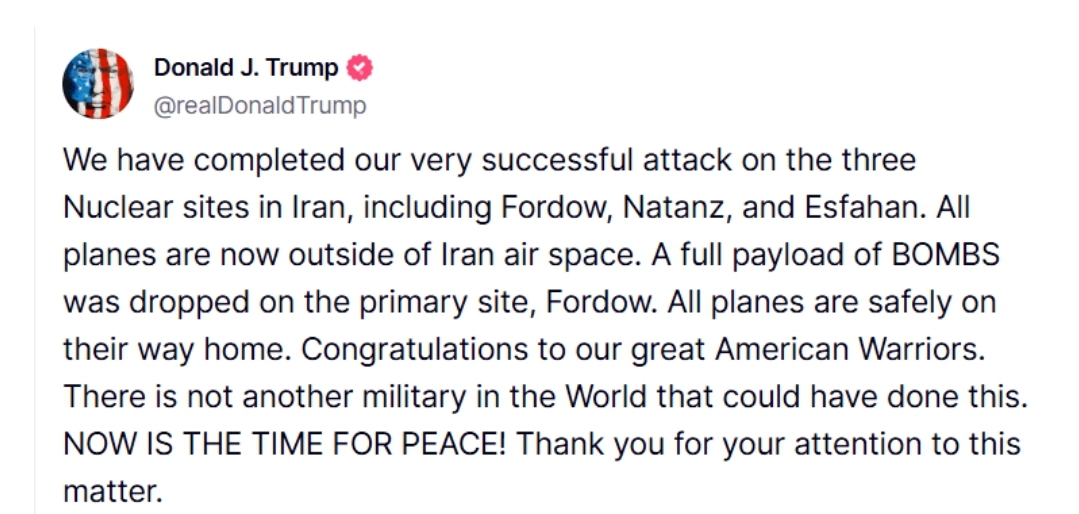
In a statement posted on his social media platform, Trump wrote, “We have completed our very successful attack on the three nuclear sites in Iran, including Fordow, Natanz, and Esfahan. A full payload of bombs was dropped on the primary site, Fordow.”
He added that all American aircraft involved in the operation had returned safely, praising the U.S. Air Force for its precision and strength. “All planes are safely on their way home. Congratulations to our great American Warriors,” he said.
The announcement comes just days after Trump hinted that he would soon decide whether to support Israel’s military campaign against Iran. That decision now appears to have been made.
A Coordinated Campaign
According to senior defense sources speaking on condition of anonymity, the U.S. deployed B-2 bombers, equipped with deep-penetration “bunker buster” bombs, to strike Iran’s fortified underground nuclear infrastructure.
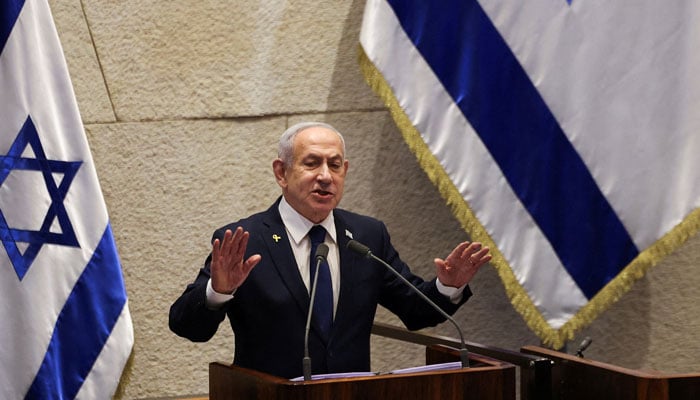
The operation reportedly followed last week’s Israeli strikes, which targeted Iran’s military installations and nuclear facilities in what has been dubbed Operation Rising Lion. The Israeli attacks on June 13 claimed the lives of several high-ranking Iranian commanders and caused widespread damage.
Iran has condemned the Israeli offensive, calling it an unprovoked act of aggression. Despite the attacks, Tehran has continued to assert that its nuclear programme is strictly for civilian energy purposes.
Global Fallout and Trump’s Statement
Trump, who remains a dominant political figure ahead of the 2026 presidential race, declared the strikes a “historic moment” and urged Iran to de-escalate. “Now is the time for peace!” he posted, along with a repost of an open-source intelligence report claiming, “Fordow is gone.”
He also announced plans to address the American public at 10pm EST to discuss the mission and its implications, calling it a defining moment for the United States, Israel, and the international community.
“Iran must now agree to end this war. Thank you!” Trump concluded in a separate post.
Iranian Reaction and Regional Risks
Tehran has yet to officially confirm the full extent of the damage or casualties but has warned of retaliation against U.S. forces stationed across the Middle East if further attacks occur. Military analysts caution that a direct conflict could draw in regional powers and ignite widespread instability.
Iran’s government maintains that it has no interest in developing nuclear weapons, insisting its uranium enrichment is intended for peaceful, civilian energy purposes. However, recent findings by the International Atomic Energy Agency (IAEA) indicate that Iran has breached its non-proliferation commitments, raising international concerns.
A U.S. intelligence assessment, cited by CNN earlier this week, reportedly found that Iran is not currently working toward building a nuclear weapon and remains several years away from acquiring one, should it choose to pursue that path.
Israel’s Nuclear Ambiguity
Israel, widely believed to possess a nuclear arsenal, is not a signatory to the Non-Proliferation Treaty (NPT) and maintains a longstanding policy of nuclear ambiguity—neither confirming nor denying its capabilities.
While Tel Aviv continues to justify its preemptive strikes as necessary for national and regional security, critics argue the escalation could spiral into a broader Middle Eastern war with devastating consequences for civilians and global energy markets.
Diplomatic Options Dwindling
With military operations now out in the open, global leaders are calling for restraint. European Union diplomats have renewed appeals for diplomacy and a return to the 2015 nuclear agreement framework. Meanwhile, Gulf nations are urging both Iran and the U.S. to avoid dragging the region into a prolonged conflict.
As the situation unfolds, the world watches closely, with the hope that diplomatic engagement may yet prevent a catastrophic confrontation.
About the Author