By Our Correspondent
LAHORE – In a move that has sparked debate across political and public circles, the Punjab government has tabled a massive supplementary budget worth Rs510.90 billion for the fiscal year 2024–25. The new figures reveal that the government significantly overshot its original budget, citing unforeseen expenditures across multiple sectors.

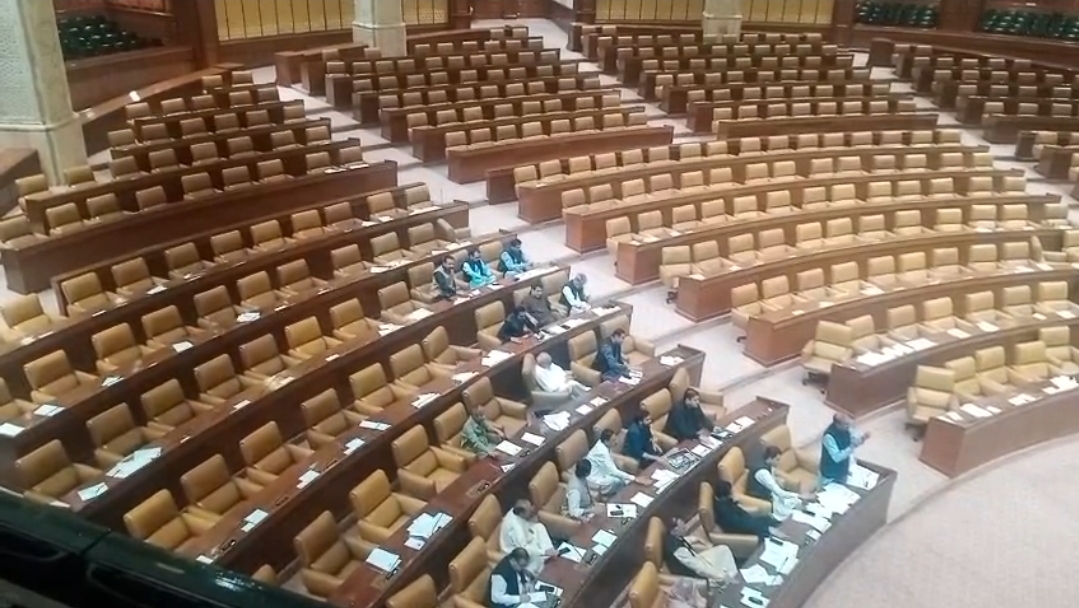
The budget was presented during a Punjab Assembly session, where it was revealed that large amounts were forked out for both developmental and administrative projects. One of the more notable allocations includes Rs875 million under the Chief Minister Minority Card, alongside Rs49 million for hosting Sikh pilgrims at Lahore’s historical Hazuri Bagh.
These spending decisions have raised concerns among critics who believe the government is spending money like water.
Security spending also took center stage. The government shelled out Rs500 million on buying security equipment for the Punjab Civil Secretariat and Rs8.5 billion on the repair of its official helicopter. Meanwhile, Rs18.57 billion was spent on creating posts in the Punjab Education Recruitment Authority (PERA), indicating a major recruitment push.
Defense-related allocations included Rs5.27 billion for check posts in border areas and Rs5.86 billion for the procurement of 25 bulletproof vehicles for the Counter Terrorism Department (CTD). In cultural and media spending, Rs100 million was granted to Ajoka Theatre, and Rs4 million to facilitate a journalists’ delegation.
Infrastructure development projects also made the cut. A massive Rs25 billion was set aside for acquiring land for the new Medical City, while the government also splashed out Rs65.65 billion on its flagship “Apni Chhat, Apna Ghar” housing scheme. Electric transport wasn’t left behind either, with Rs9.33 billion allocated for purchasing electric buses.
In terms of future planning, Rs2.71 billion was spent on a feasibility study for a proposed Glass Train project. The government also allocated Rs500 million for the construction of a new NAB Complex in Lahore and Rs1 billion for the security of foreign workers on the Orange Line Metro Train.
Health-related spending included Rs1.39 billion towards overdue coronavirus vaccine payments. Meanwhile, Rs3 billion was spent on establishing the Sahulat Bazaar Authority, aimed at stabilizing prices of essential goods.
Financial support was also extended to institutions. The Lahore Development Authority (LDA) received a Rs10 billion loan, while Rs2 billion was handed to the Punjab Saaf Pani Authority. The University of Engineering and Technology (UET) was granted a Rs1 billion loan, signaling a push for higher education support.
While the government has defended these expenditures as necessary for development and service delivery, critics argue that such lavish spending could burn a hole in the public purse. With rising inflation and widespread economic hardship, many believe the administration needs to tighten its belt and focus on fiscal discipline.
As the supplementary budget is debated in the days to come, the big question remains: is this additional spending money well spent, or is the government simply papering over the cracks of poor financial planning?
About the Author