By Our Correspondent
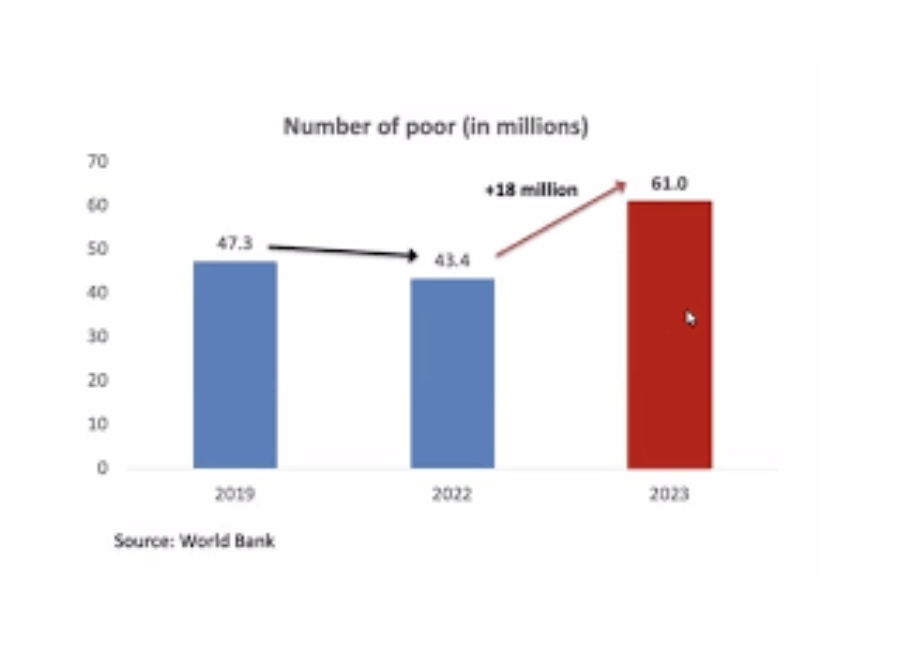
LAHORE: According to the World Bank’s latest “Poverty & Equity Brief,” 44.7% of Pakistan’s population is now living below the poverty line when assessed under the updated global benchmark of $4.20 per day (2017 PPP). This significant increase underscores the deepening economic challenges facing the country.

The report highlights that despite a 2.6% economic growth in FY24, the expansion was insufficient to alleviate poverty. Factors such as high inflation, limited job creation, and underrepresentation of wealthier households in surveys have contributed to a rise in consumption-based inequality by nearly two points since FY21.
Agriculture, a critical sector for Pakistan’s economy and rural employment, has faced significant setbacks. A 40% reduction in rainfall, pest infestations, and shifting crop production choices have led to projected declines in crop yields, notably a 29.6% drop in cotton production and a 1.2% fall in rice yields. These challenges have limited agricultural sector growth to less than 2%, impacting rural poverty, which is expected to rise slightly by 0.2 percentage points. Agricultural workers’ real incomes are also expected to fall by 0.7% in FY25.
Food insecurity remains a pressing concern, with an estimated 10 million people at risk in rural areas. Fiscal tightening has further hampered development spending, particularly affecting the construction industry, which employs 17% of the country’s poor in daily wage jobs.
The World Bank emphasizes the need for structural reforms to turn economic stabilization into sustained, inclusive growth. Efforts include enhancing social safety nets like the Benazir Income Support Programme (BISP), which provides direct cash transfers to economically vulnerable populations, helping to alleviate the negative impact of regressive taxation and improve income distribution.
As Pakistan navigates these economic challenges, targeted interventions and policy reforms remain crucial to reversing the upward trend in poverty and ensuring inclusive growth for its population.
About the Author