LCCI President Thanks PM Shehbaz, Hanif Abbasi
LCCI president and govt lauded for swift resolution issue
By M Qadeet
LAHORE – In a significant relief to the business community, the federal government has ordered the immediate desealing of hundreds of steel godowns in Lahore’s Badami Bagh area after a strong protest by the Pakistan Steel Traders Association and intervention by the Lahore Chamber of Commerce and Industry (LCCI). The swift action came following the publication of a news report highlighting the concerns of traders, prompting Federal Minister for Railways Hanif Abbasi to take immediate notice of the situation.

Read also: Road blockages in Sindh severely hitting Trade and Economy: LCCI demands immediate resolution
According to traders, the move to seal godowns without prior notice on May 1 – a public holiday – was not only unjust but also a blow to business morale. In a matter that sparked widespread condemnation across business circles, Pakistan Railways officials had sealed over 300 shops and storage facilities, including the office of the traders’ association, labor rooms, and even washrooms, creating panic and halting commercial activity in one of Lahore’s busiest trading zones.
However, just hours after the report was published and a delegation of the Pakistan Steel Traders Association visited the LCCI to raise their grievances, the matter was escalated to the highest levels of government. Railway Minister Hanif Abbasi, after consultations with Prime Minister Shehbaz Sharif, ordered an immediate reversal of the sealing operation. Within six hours, the majority of the affected godowns were desealed and business operations resumed, much to the relief of the traders.
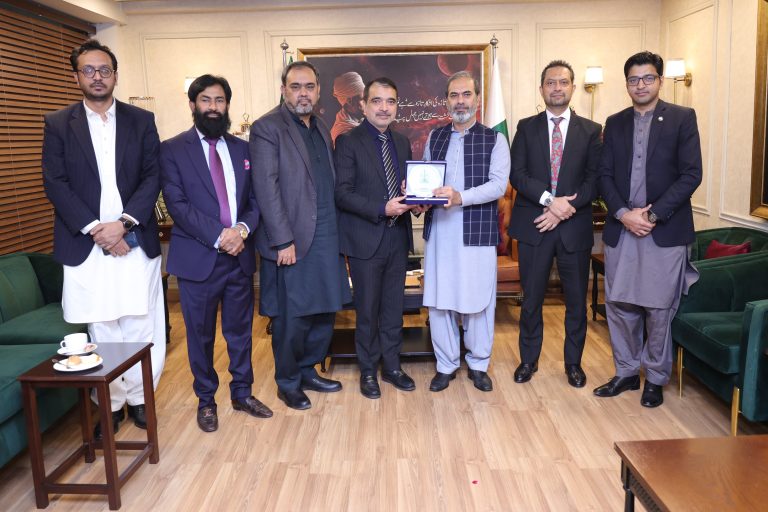
Traders expressed deep gratitude to LCCI President Mian Abuzar Shad for his unwavering support during the crisis. They lauded his prompt response and appreciated the way he escalated the issue to the Prime Minister’s Office and Ministry of Railways. In a press briefing on Friday evening, Sheikh Umar Sarfraz, Ehsan Mehmood, Haji Alauddin, Sheikh Usman, Mian Tahir, and Malik Ijaz — all key representatives of the steel traders — thanked the LCCI leadership for standing shoulder to shoulder with them during what they termed as “an extremely distressing episode.”
“The desealing within six hours is nothing short of a miracle, and for this, we are extremely thankful to Mian Abuzar Shad and the Lahore Chamber,” said Sheikh Umar Sarfraz. “We also extend our heartfelt thanks to Railway Minister Hanif Abbasi and Prime Minister Shehbaz Sharif for acting swiftly to correct this injustice.”
The traders acknowledged that bureaucratic overreach had become a major issue for business operations and emphasized that the timely intervention by democratic institutions and business leadership was key to restoring their confidence in the system.
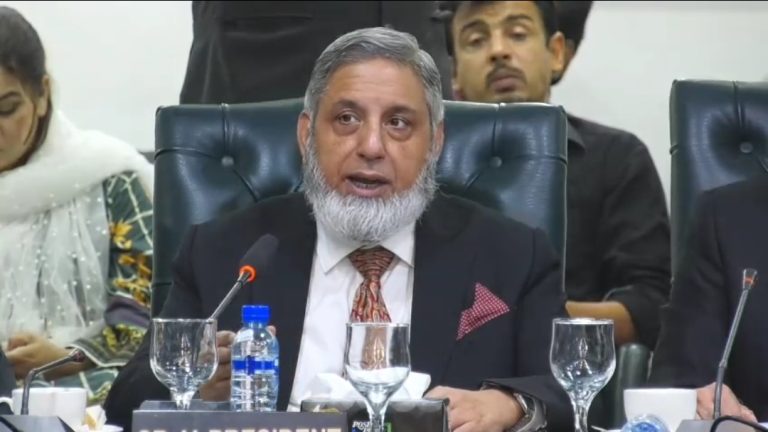
Speaking to the media after the successful resolution of the crisis, LCCI President Mian Abuzar Shad expressed his appreciation for Prime Minister Shehbaz Sharif and Federal Minister Hanif Abbasi. He said that their swift action not only averted a major business disruption but also sent a positive signal to the business community nationwide.
“I personally want to thank Prime Minister Shehbaz Sharif and Railway Minister Hanif Abbasi for listening to the concerns of traders and responding without delay,” Mian Abuzar Shad said. “The desealing of these godowns within six hours demonstrates the government’s seriousness in resolving business issues and promoting an investment-friendly environment.”
He added that such responsiveness is critical when Pakistan’s economy is already under pressure, and industrial activity is slowing down across many sectors. “If traders and industrialists are to keep the economy afloat, they must be facilitated, not harassed,” he said.
While the issue of sealing was resolved efficiently, traders demanded that such incidents not be repeated in the future. They urged the government to introduce policy-level reforms to prevent arbitrary actions by bureaucrats. “There should be clear guidelines on how to deal with business disputes involving government departments. The use of force should be the last resort, not the first,” said Malik Ijaz.
The traders also renewed their demand for the formation of a Dispute Resolution Committee, with equal representation from traders, LCCI, and government departments, to address such issues through dialogue. “We believe in working with the system, not against it. But we also need the system to respect our legal rights and the contributions we make to the national exchequer,” said Mian Tahir.
The incident and its resolution drew reactions from political and civil society circles as well. Several lawmakers and analysts praised the quick response by the federal government. “This shows that when media, business leadership, and the government work together, solutions can be achieved swiftly and peacefully,” said a senior journalist covering trade and industry.
A number of political figures, including members of the ruling Pakistan Muslim League-Nawaz (PML-N), also appreciated the role of LCCI in highlighting the issue and working toward a constructive outcome. They urged other chambers of commerce across the country to emulate the LCCI’s model of proactive engagement.
By Friday evening, the sealed godowns had resumed operations, with workers unloading and restocking material in full swing. The traders association also reopened its office, and normalcy began to return to the commercial area of Badami Bagh.
While the immediate crisis has been averted, the episode has left a mark on the business community. “We hope this will be the last time we face such a situation,” said Haji Alauddin. “We want to focus on growing our businesses and contributing to the economy — not fighting bureaucratic overreach.”
In his concluding remarks, LCCI President Mian Abuzar Shad reiterated the importance of inter-institutional coordination. “Whether it’s Pakistan Railways or any other government department, action against businesses should be taken only after due consultation with stakeholders. The Chamber stands ready to mediate and facilitate in any such matter.”
He stressed that Pakistan’s future depends on a robust and confident business community. “We must eliminate fear from business circles and instead replace it with support, consultation, and facilitation. That is the only way we will move forward.”
The swift desealing of the godowns after six hours of high-level engagement is a positive example of how prompt coordination between the business community and government can avert crises and restore business confidence. It stands as a testament to what can be achieved through dialogue, leadership, and a shared vision for economic stability. The episode has also reignited the discussion on the need for long-term structural reforms to protect the rights of traders and promote a more transparent, business-friendly regulatory environment in Pakistan.
About the Author