By Asim Shahzad
LAHORE: AwazCDS-Pakistan, HomeNet Pakistan, and Pakistan Development Network, under their ongoing initiative *”Strengthening Local Governments to Promote Democracy in Pakistan (SLGPD),” have officially launched a pivotal study examining local government budgetary allocations and expenditures. The study highlights critical constitutional, financial, and administrative gaps that continue to undermine effective local governance across the country.

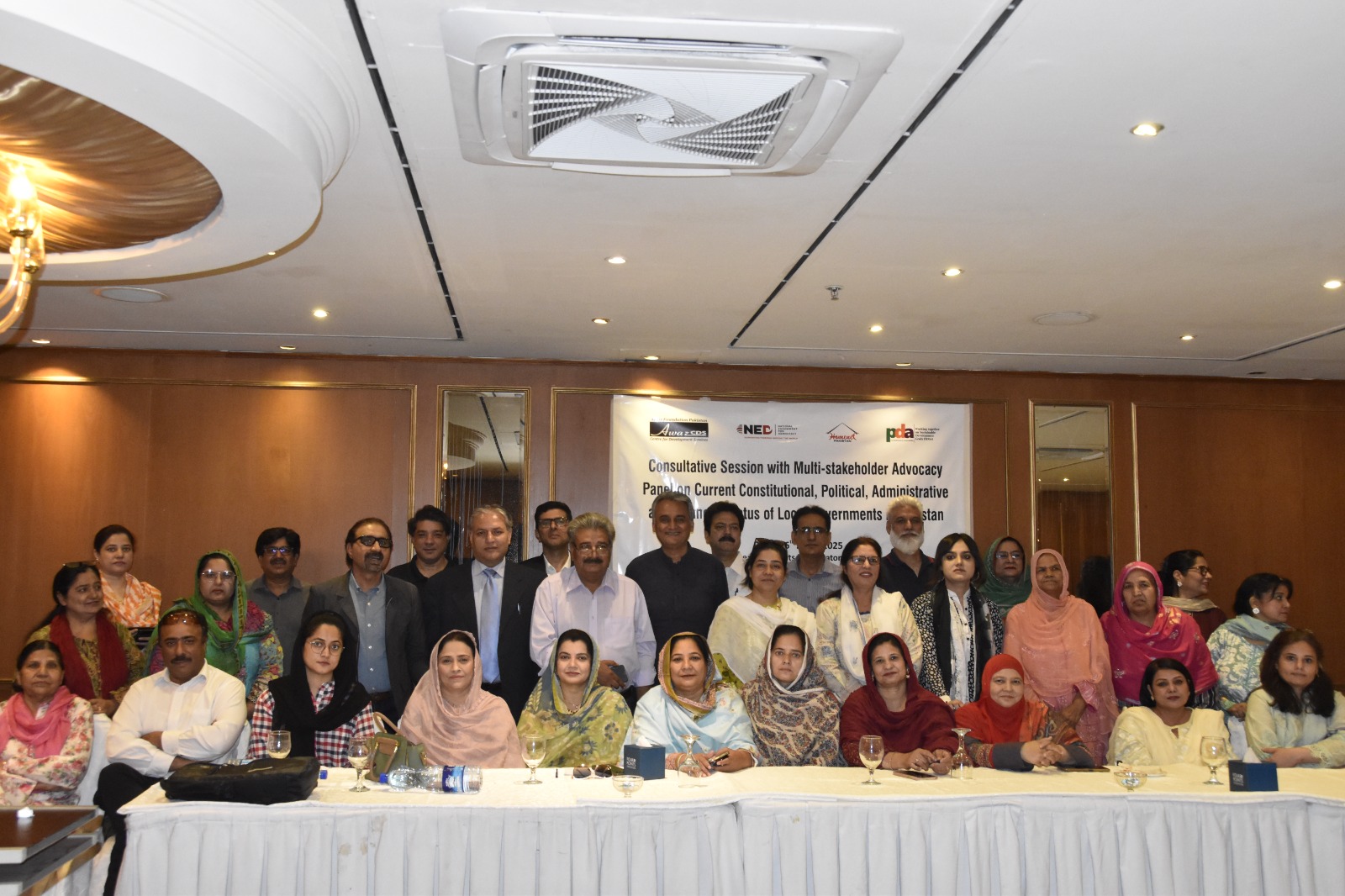
The initiative aims to promote democratic governance by advocating for greater financial and administrative transparency at the local level. The study launch event, organized in collaboration with the Pakistan Development Alliance and its member organization UGood, brought together a diverse group of stakeholders including members of Parliament, political party representatives, civil society organizations, local government officials, media professionals, and bar council representatives.
Zia Ur Rehman, Chief Executive of AwazCDS-Pakistan, presented the study’s findings, emphasizing that without constitutional safeguards, fiscal decentralization remains ad hoc and politically motivated. He stressed that local governments must be recognized as an independent third tier of government rather than mere administrative extensions.
The study revealed major challenges facing local governments. Unlike federal and provincial entities, local governments lack constitutional protection and clear budgetary frameworks. In provinces such as Punjab and Khyber Pakhtunkhwa, only a handful of Provincial Finance Commission (PFC) meetings have been convened since 2008, while Sindh and Balochistan have witnessed none. As a result, financial allocations are often arbitrary and lack transparency. The study further noted that budgetary allocations for local governments have declined between 2023 and 2025, particularly in Sindh and Balochistan, while the authority to raise local revenues remains largely with provincial governments.
Civil society leaders called for urgent constitutional, legal, and procedural reforms, including the insertion of a dedicated chapter on Local Governments in the Constitution to ensure clear legal protection and status. They demanded institutionalization of Provincial Finance Commissions with fixed timelines, formula-based financial transfers to local bodies, mandatory local government elections, and transparent administrative and financial devolution mechanisms.
The event also served as a platform for dialogue and policy recommendations to guide future reforms for sustainable local governance in Pakistan.
Prominent speakers including Mr. Ishtiaq Chaudhry (Supreme Court Lawyer), Mr. Zafar Malik, and Mr. Zia Ur Rehman strongly criticized the existing Local Government laws. Participants unanimously demanded a separate and dedicated budget for local governments, rather than merging their allocations with sectors like education and health, particularly in Punjab.
Ms. Mahnoor, CEO of the Khawajasara Society, underscored the need to strengthen transparency and accountability mechanisms, while Syeda Imtiaz Fatima, Chairperson of VOICE Society, advocated for a fixed quota for Persons with Disabilities in local governance structures. Members of the Provincial Assembly, Ms. Fatima Begum and Ms. Sumble Malik, pledged to raise these critical demands in the Punjab Assembly.
AwazCDS-Pakistan and the Pakistan Development Alliance reaffirmed their commitment to advancing constitutional, political, and financial reforms to empower local governance, framing it as essential for Pakistan’s democratic
About the Author