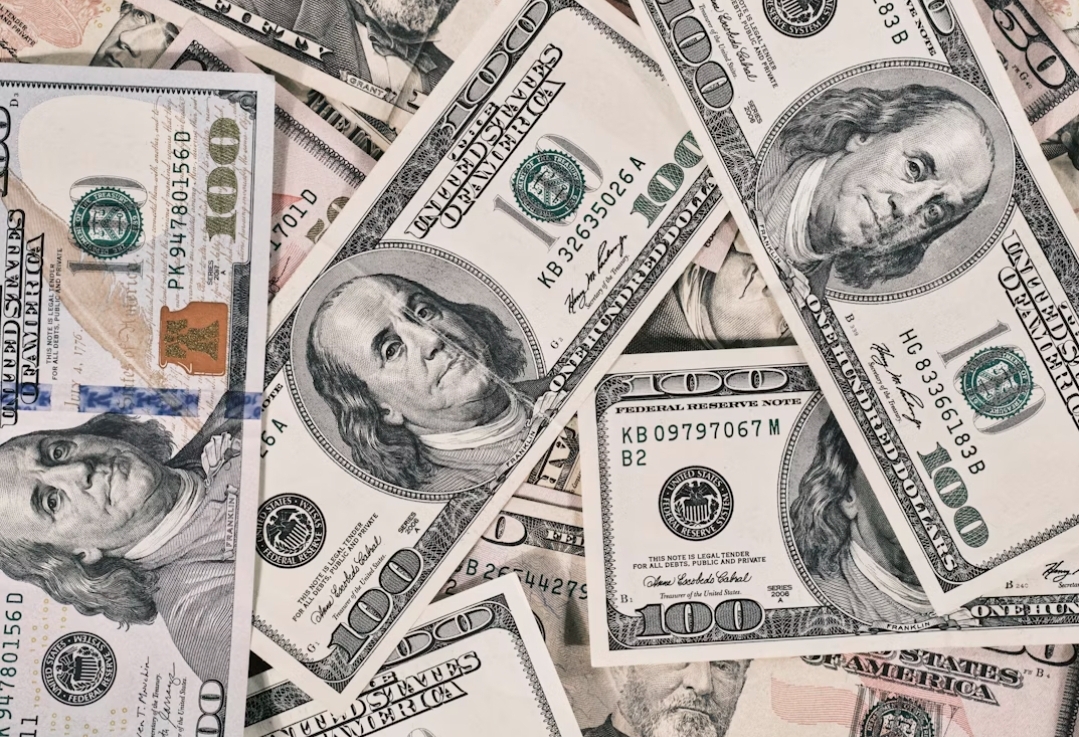
LAHORE (News Desk) — The US dollar, long seen as a pillar of global economic stability, is on the sharp decline as President Donald Trump’s aggressive trade policies and erratic decision-making send shockwaves through international markets.
Since mid-January, the dollar has fallen 9 pre cent against a basket of major currencies — a rare and significant drop — prompting fears that its role as the world’s reserve currency may be slipping.
Traditionally strengthened by tariffs, the dollar has instead dropped down significantly under Trump’s trade war rhetoric, alarming economists and investors alike.

The “exorbitant privilege” of the dollar — enabling cheap borrowing and geopolitical clout — is suddenly at risk.
Deutsche Bank recently warned of a looming “confidence crisis,” while Capital Economics noted that the dollar’s dominance is “at least somewhat in question.”
The declining dollar, down over 5 per cent against the euro and pound and 6 per cent against the yen, threatens to raise prices for imports and increase interest rates for consumers and the US government.
With federal debt now exceeding 120 per cent of GDP, the cost of borrowing could spiral if global trust in the dollar erodes further.
Trump’s unpredictable approach — rolling out tariffs with little warning, pressuring the Federal Reserve to lower rates, and making controversial economic claims — has amplified investor uncertainty. His actions echo the 1956 Suez Crisis, which ended the British pound’s dominance as a global currency.
Meanwhile, economic rivals like China are accelerating moves to bypass the dollar in global trade, promoting the yuan in deals with Brazil, Russia, and South Korea.
Even cryptocurrencies like Bitcoin are being floated as future alternatives.
“This is the first step down a slippery slope where international confidence in the American dollar has lost,” warned UC Berkeley economist Barry Eichengreen. If current trends continue, the dollar’s supremacy may become history.
About the Author