Stakeholders appeal for government intervention to address bureaucratic hurdles and systemic failures
By Ghulam Shabbir
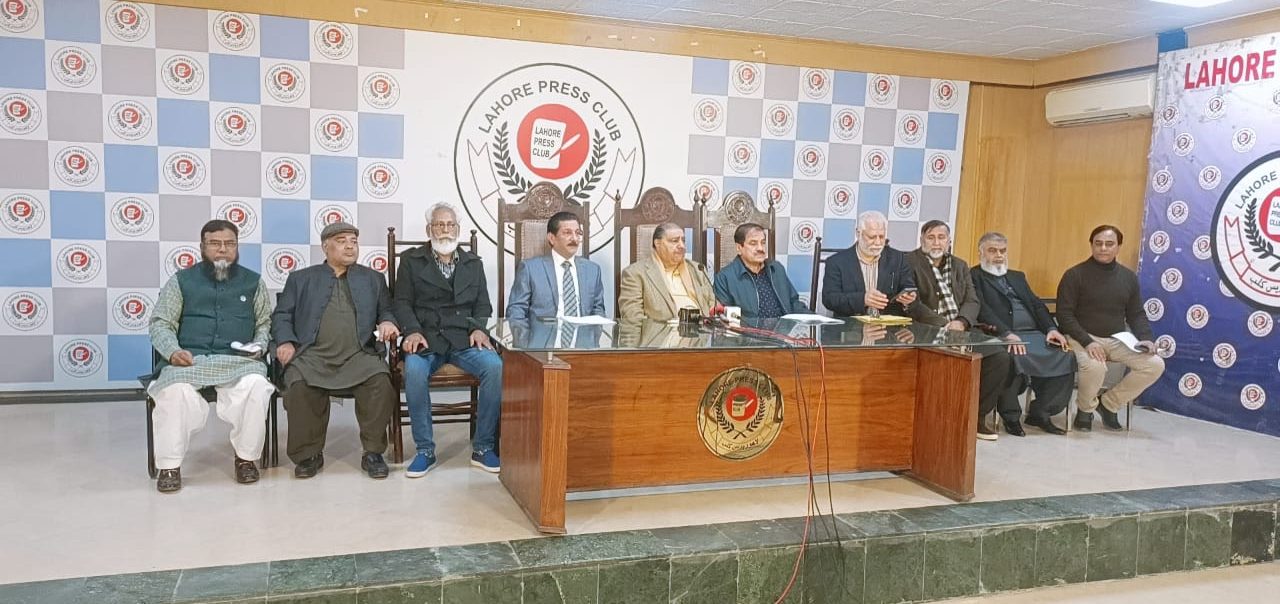
LAHORE: The Lahore Customs Agents Association and other key stakeholders in Pakistan’s trade and logistics sector held a press conference to raise alarms over the operational inefficiencies plaguing the country’s dry ports.

The crisis, marked by prolonged delays, escalating costs, and declining revenue, has left thousands of families financially strained while impacting trade operations nationwide.
Amjad Chaudhry, Chairman of the Lahore Customs Agents Association, emphasized that dry ports, originally established to streamline import and export processes, are now underperforming due to bureaucratic delays and systemic inefficiencies.
He revealed that daily revenue at the Lahore Dry Port has plummeted from Rs800 million to just Rs100 million, rendering over 500 families unemployed.
Chaudhry criticized the lack of timely government action to renew the contract of the tracking company responsible for ensuring safe transportation of goods between ports.
The previous contract expired on December 31, 2024, leaving no alternative arrangement in place.
“Where a trailer previously took two days to travel from Karachi to Lahore, it now takes six to seven days,” said Chaudhry, highlighting the severe inefficiencies in logistics. This has led to a substantial increase in container rental costs, burdening traders and disrupting the supply chain.
Read more: FBR initiates reorganization of Directorate General of Intelligence & Investigation (Customs)
Containers are now being transported in convoys to mitigate theft risks, but this measure has further slowed down operations.
Over 2,000 containers remain uncleared at Karachi Port due to these complications, said Sajid Mir, Chairman of the Khairpur Chamber of Commerce and Industry.
Mir disclosed that Punjab’s trade sector is suffering daily losses exceeding Rs50 million. “Despite writing multiple letters to customs officials, no remedial action has been taken.
The government’s inaction is costing the economy dearly,” he lamented.
Masood Butt, Vice President of the Small Traders and Small Industry Lahore, appealed to the Federal Board of Revenue (FBR) to take immediate notice of the situation, stressing that the ongoing crisis contradicts the government’s trade facilitation vision under the China-Pakistan Economic Corridor (CPEC).
Former President of Lahore Customs and Clearance, Agha Iftikhar, called for the revival of the railway freight system to improve trade logistics. “A functional railway system could alleviate many of these challenges and significantly enhance trade efficiency,” he said.
Farooq Hassan, President of the Lahore Customs Agents Association, added that systemic flaws, such as the absence of accountability for negligent officials, have exacerbated the situation.
“Officers responsible for delaying the renewal of contracts must be held accountable,” he demanded.
The association collectively appealed to Prime Minister and the Chief Minister to intervene urgently. They stressed the need to safeguard the livelihoods of thousands and restore efficiency to the country’s trade infrastructure.
“CPEC envisions the creation of 40 additional dry ports, but the government must first ensure that the existing ones are operational,” remarked Chaudhry.
The stakeholders urged FBR and the government to act promptly to renew the tracking system contracts and address systemic flaws that are hampering trade operations.
They emphasized that such inefficiencies not only harm the economy but also undermine Pakistan’s global trade commitments.
About the Author